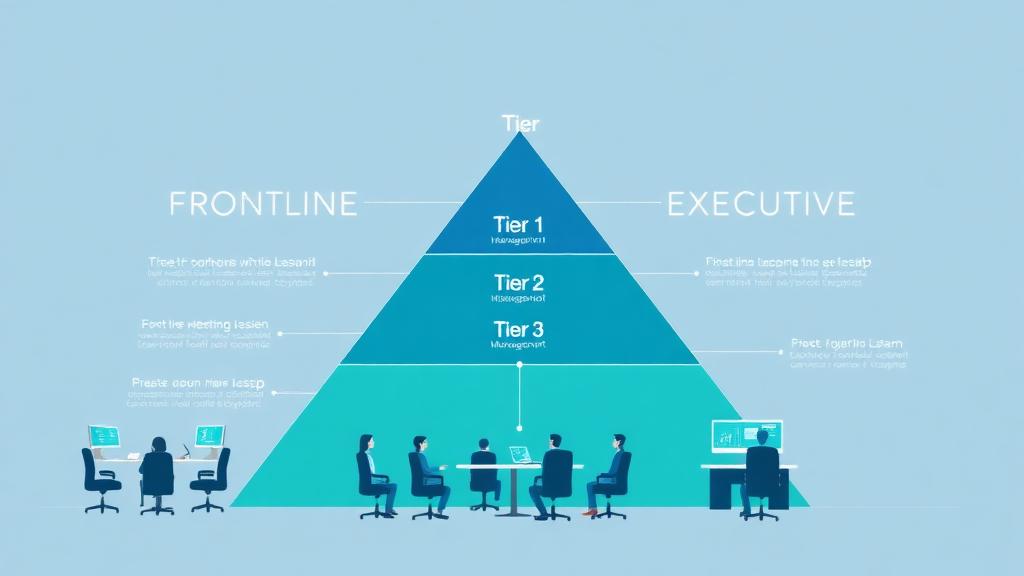
Daily huddles are the engine room of Tiered Daily Management. Here are three practical tips to make yours more effective and valuable.
Daily huddles – also known as Tier 1 meetings, stand-ups, or toolbox talks – are the foundation of an effective daily management system. When done well, they align your team, surface issues early, and build a culture of accountability. When done poorly, they become a box-ticking exercise that people endure rather than value.
Here are three tips to optimise your daily huddles and make them a genuine driver of performance.
Tip 1: Keep It Short and Focused
Huddles should be 5–15 minutes maximum. If you're consistently running over, you're trying to cover too much. The purpose of a huddle is alignment and issue identification, not detailed problem solving.
To keep things tight:
- Use a standard agenda that everyone knows
- Focus on exceptions – what's different today, what needs attention
- Park detailed discussions for follow-up with the right people
- Stand up! It naturally keeps things brief
Remember, the huddle is a pulse check. It should answer three questions: What happened yesterday? What's planned for today? What's in the way?
Tip 2: Make It Visual
A visual board – physical or digital – transforms the huddle from a talking session into a focused review. When everyone can see the same data, discussions become more objective and efficient.
Your board should display:
- Safety – any incidents or near-misses
- Quality – defects, customer complaints, process deviations
- Delivery – schedule adherence, output vs target
- People – attendance, skills gaps, training needs
- Improvement – open actions, PDCA progress
The visual board also creates continuity between huddles. Yesterday's actions become today's check-ins. This closes the loop and builds trust that issues raised will be addressed.
Tip 3: Escalate Effectively
Not every issue can be resolved at the team level. An effective huddle includes a clear escalation process – issues that can't be resolved locally should be flagged to the next tier (Tier 2) with the right information.
Good escalation requires:
- Clear criteria for what gets escalated
- A simple mechanism to pass issues up (not just verbal – document it)
- Feedback loops so teams know what happened with their escalation
- Time-bound expectations for responses
Without effective escalation, frontline teams lose faith in the system. They stop raising issues because nothing ever seems to happen. With it, they feel heard and supported, which drives engagement.
Daily Huddles Are Part of a Connected C.I. Framework
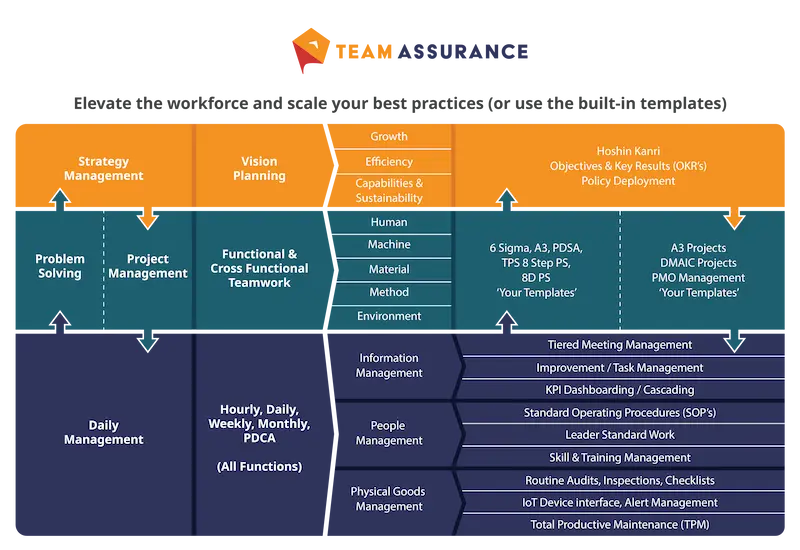
Daily huddles don't exist in isolation. They are one element of a broader Tiered Daily Management system that connects frontline activity to strategic objectives. For huddles to truly thrive, they must be supported by standard work, structured problem solving, and skills development.
If you'd like to explore how to optimise your daily huddles as part of a connected daily management system, contact us for a demonstration of the TeamAssurance platform today.