In this blog we delve into the transformative impact of digitization on Tier 2 meetings. We draw these insights from our webinar streamed live on LinkedIn. You can watch the full version on demand.
Tier 2 meetings are the crucial link between strategic planning and frontline execution. As organisations grow the need to maximise the impact of routine meetings becomes evident at each level. That's where digitization has so much value, whatever your industry.
So let's dive into integrating Tier 2 meetings with the other tier meetings, focus conversation on priority activity and better allocate resources.
Why are Tier 2 Meetings Necessary?
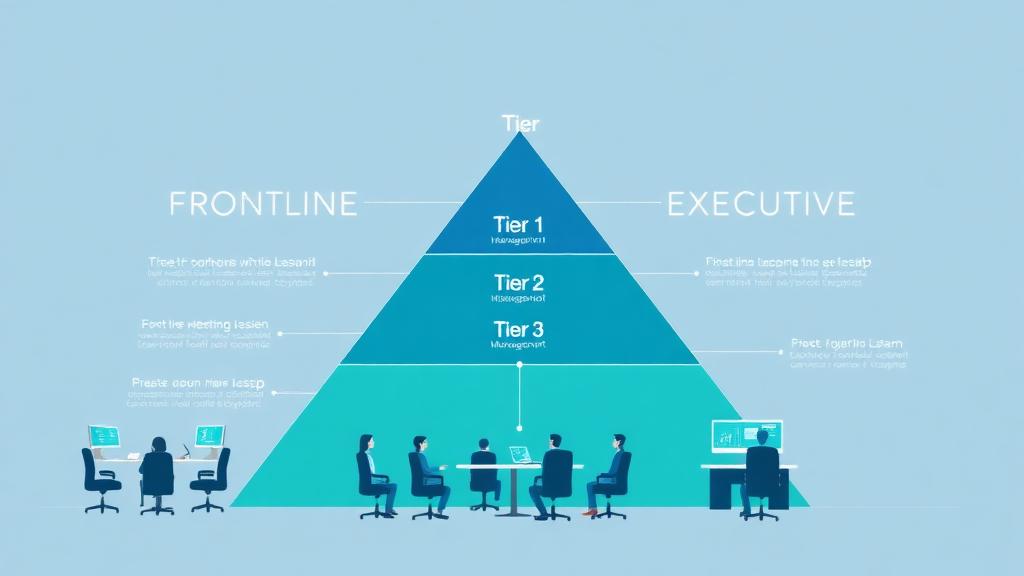
Tier 2 meetings, or function level meetings, are where department heads / team leaders manage and discuss the work within their specific functions. Unlike Tier 1 meetings, which focus on the immediate issues and daily tasks of frontline teams, Tier 2 meetings aim to align departmental activities with broader organizational goals.
They can also serve as a forum for cross-functional leaders to collaborate, share insights, and troubleshoot interdepartmental challenges. This keeps all parts of the organisation moving in harmony towards common objectives.
The primary purpose of Tier 2 meetings is to connect strategy with execution. Leaders at this level translate the high-level objectives into actionable plans that their teams can implement.
Working as both an escalation for urgent issue resolution from Tier 1 as well as the governance of the work systems that operate in that function, these meetings manage not only the day, but also the week and month for that function.
Challenges in Tier 2 Meetings
Middle management, often described as the "meat in the sandwich" frequently faces challenges from both ends—escalation issues bubbling up from Tier 1 and strategic directives coming down from the leadership.
This dual pressure can lead to bottlenecks, where important information is delayed or distorted as it passes through layers of management.
Additionally, without a clear system for prioritization and collaboration, Tier 2 leaders can become overwhelmed, hindering effective decision-making and progress.
The Digital Transformation of Tier 2 Meetings
Digitizing Tier 2 meetings offers a promising solution to these challenges, enhancing efficiency and reducing the bottlenecks that plague middle management.
By leveraging digital tools, organizations can facilitate better communication, improve access to real-time data, and streamline the management processes.
1. Enhanced Communication and Information Flow
Digital platforms can integrate data across various functions, allowing leaders to access up-to-date information during meetings. This integration helps in making informed decisions quickly and efficiently, reducing the time spent on information gathering and verification.
Digitization ensures that the decisions and insights from Tier 2 meetings are promptly communicated back to the teams, accelerating implementation and feedback loops.
2. Improved Prioritization and Decision-Making
With digital tools, Tier 2 leaders can visualize critical metrics and performance indicators in real-time. This visibility helps in prioritizing issues that need immediate attention and aligning team efforts with the organizational goals. Digital dashboards can highlight areas of concern, enabling leaders to focus their efforts where they are most needed, thus optimizing resource allocation.
3. Proactive Improvement Systems
Digitization allows for the establishment of proactive improvement systems within the Tier 2 framework. These systems, governed by the principles of continuous improvement and lean management, focus on preemptive problem-solving rather than reactive firefighting.
For example, a digital tool can track the lifecycle of an issue from identification to resolution across all relevant functions, ensuring that improvements are systematically applied and tracked over time.
4. Cross-functional Collaboration
Digital platforms facilitate cross-functional collaboration by providing a shared space where leaders from different departments can work together on joint projects. These collaborative efforts are essential for addressing complex challenges that span multiple areas of the business.
By breaking down silos, digital tools help create a more integrated and cohesive operational environment.
The Impact of Digitizing Tier 2 Meetings
The impact of digitizing Tier 2 meetings extends beyond mere operational efficiency. It fosters a culture of transparency, agility, and continuous learning.
Leaders become better equipped to manage their teams, drive improvements, and contribute to the strategic objectives of the organization.
Furthermore, digital tools help in developing future leaders by providing them with the skills and experience needed to operate in a fast-paced, data-driven business environment.
Tier 2 Meetings Are Part of a C.I. Framework not Locally Optimised 'Islands'
Tier 2 meetings, like every other huddle, must be supported by Lean tools and processes. Things like standardised problem solving techniques, Standard Operating Procedures (SOPs), and a digital Daily Management system are still applicable at Tier 2. The goal is to connect every team throughout the entire PDCA loop.
However, organisations should ensure that all standards and processes at every tier are developed together, not in isolation. Without considering all adjacent processes we can end up with misalignment of people, information silos, and sub-optimal procedures.
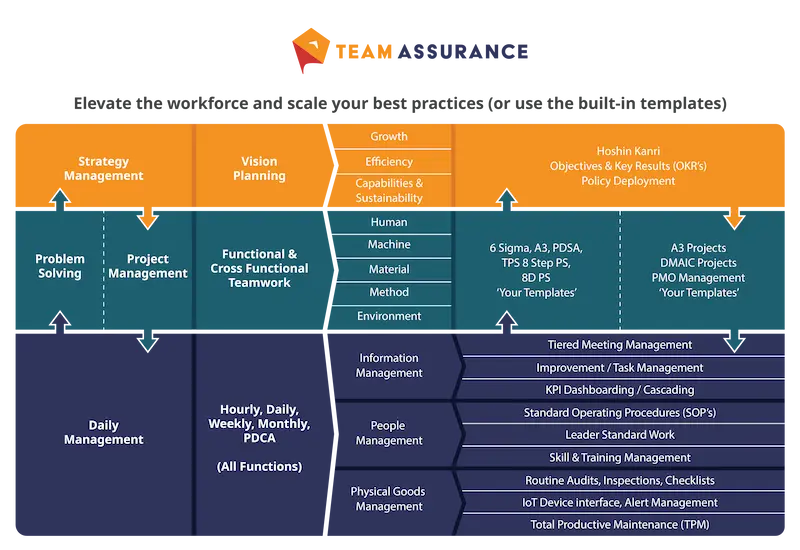
The graphic below demonstrates how we designed TeamAssurance to avoid locally optimised, disconnected 'Point Solutions' (digital or analog) that do not help, and may even hinder the progress toward your goals.
If you're a business in need (or a consultant with clients in need) and you'd like to explore the opportunities that digital tools provide – contact us for a demonstration of the TeamAssurance platform.