
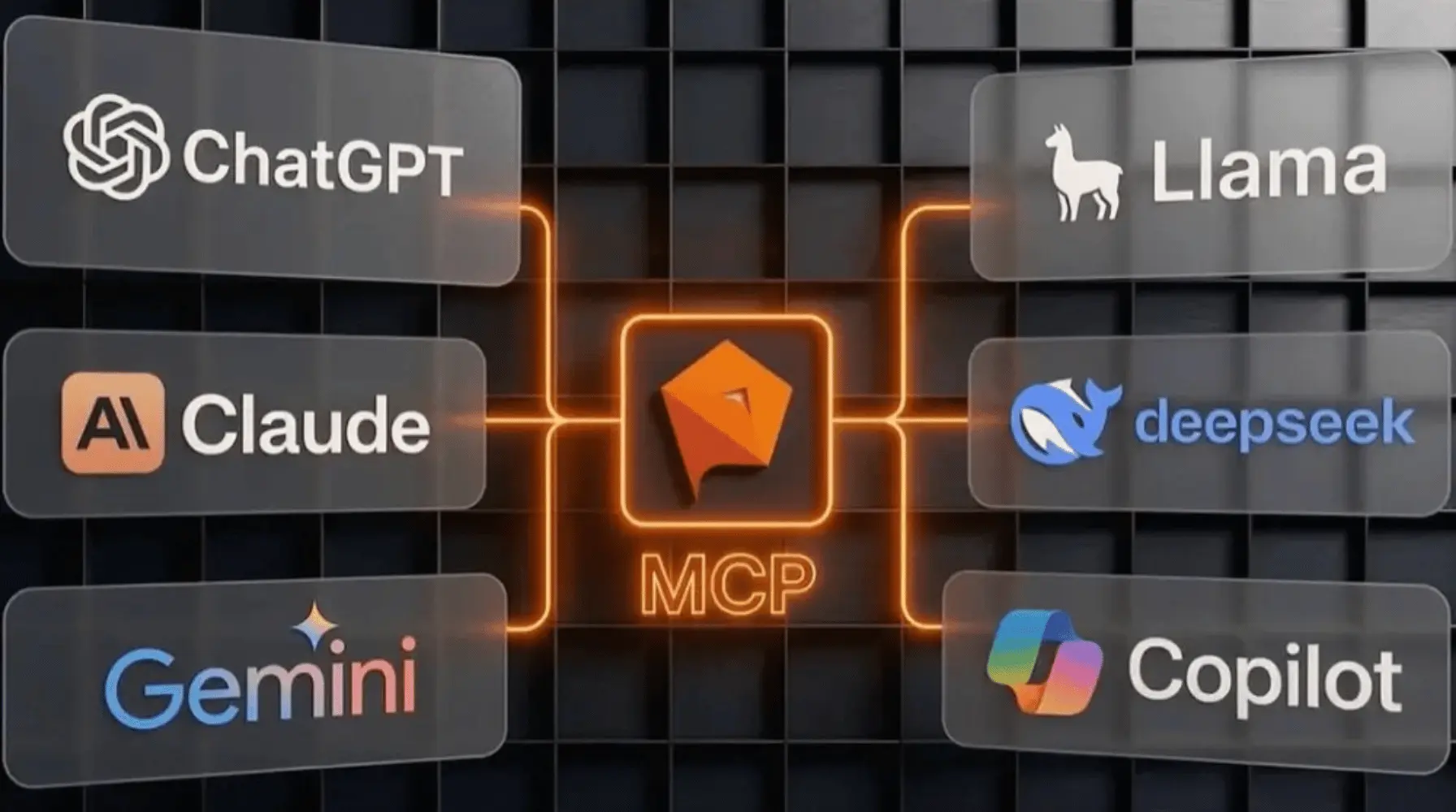
Why We Let You Connect to Your LLM Instead of Selling You Ours
Enterprise AI has moved quickly from curiosity to infrastructure. Most serious organisations are no longer asking whether they will use AI, but which models they trust, where the data can go, who governs the use, and how the technology fits inside existing security, legal and IT frameworks.
That is sensible. AI is no longer a toy sitting in the corner and is quickly becoming part of the operating environment.
For TeamAssurance, the question is not whether intelligence should exist inside the product. It should, and it does. There is a strong place for product-native intelligence, built directly into the way TeamAssurance supports daily management, problem solving, actions, standards, skills and operational learning.
This article is about the other path, which is just as important.
Many customers already have an enterprise LLM. They already have governance. They already have a preferred AI stack. They already have rules.
So rather than forcing those customers into another model choice, TeamAssurance can also connect their chosen LLM to the operational management system they already need.
Keep your LLM and connect it to your management system.
Your LLM. Your Rules.
Most enterprise customers already have a preferred AI direction. Some are standardising around Microsoft Copilot. Some are working with OpenAI, Anthropic, Google, AWS or other approved providers. Some are still deciding, but they usually have strong views about governance, data handling, access control, auditability and vendor risk, which is understandable. This should be respected.
The answer is not for every software vendor to arrive with its own little AI kingdom and insist the customer adopts it. That creates more approvals, more security work, more procurement noise, more vendor lock-in and more complexity for IT teams already carrying enough.
TeamAssurance does not need to force a customer into our preferred model to make AI useful. The customer should be able to use the LLM they trust, under the rules they have already approved, connected to the operational context held inside TeamAssurance.
MCP connectivity creates that connection without asking the customer to abandon their approved model, governance framework or existing AI investment.
That is what “your LLM, your rules” means.
It respects the customer’s governance. It supports existing investment. It gives the business a way to bring enterprise AI into operations without starting again.
AI Governance Matters
AI governance is not an obstacle to progress. It is how progress survives contact with a real organisation.
Manufacturers have sensitive operational data. Safety events, quality issues, customer complaints, supplier problems, maintenance history, cost losses, skills gaps, workforce information, audits, investigations and strategic priorities. This is material that needs care from a governed system.
A serious AI approach must respect access controls, role permissions, approved data pathways, audit requirements and enterprise policy. This is simply how well-run organisations operate.
Connecting to the customer’s approved LLM helps reduce risk because the organisation keeps control of the AI environment. TeamAssurance provides the operational memory. The customer’s AI stack provides the model layer. MCP connectivity provides a governed way for the two to speak.
No drama. No shadow AI. No second governance universe.
Built-In Intelligence And Connected Intelligence
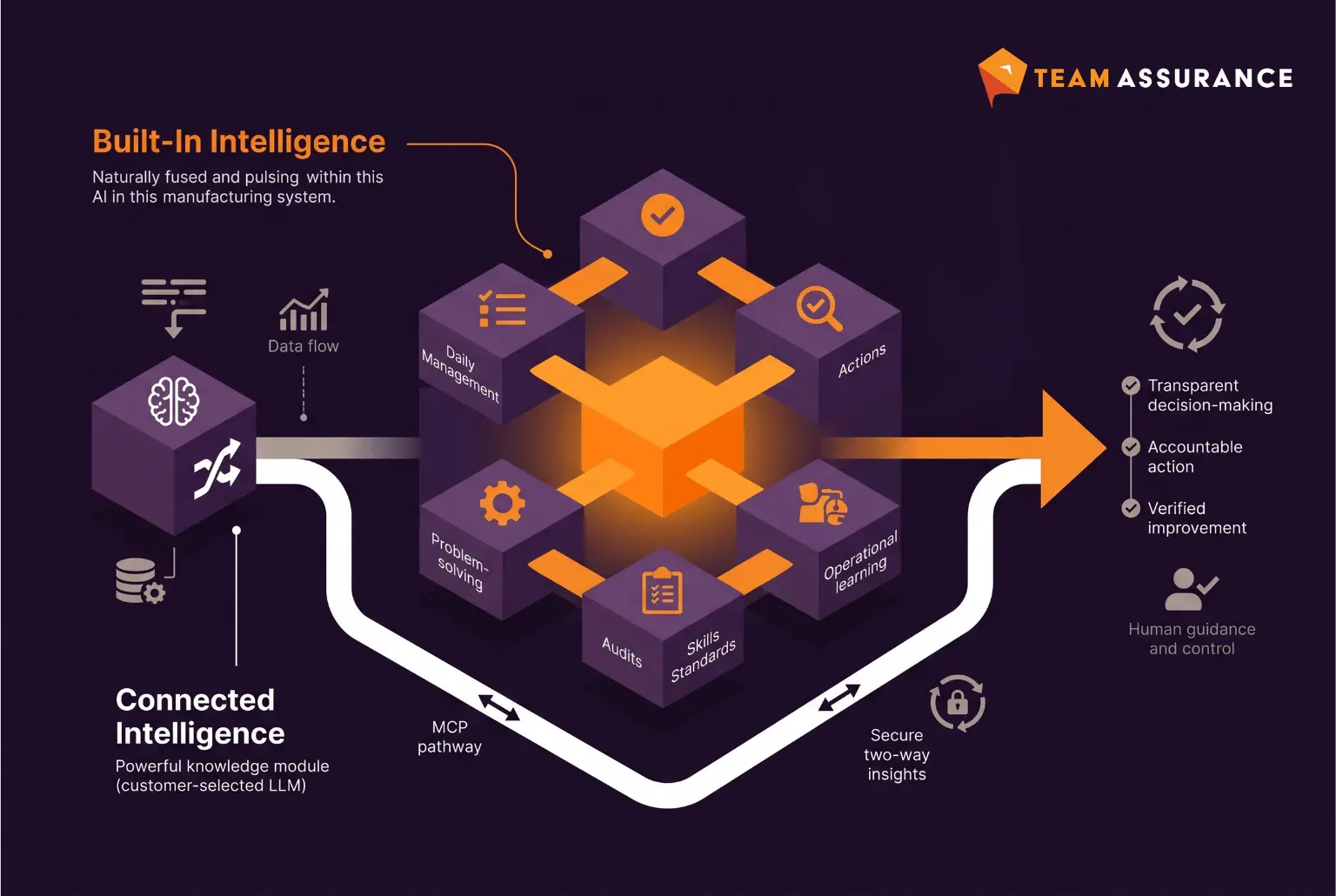
There are two useful ways to bring AI into an operational management platform.
One is built-in intelligence. This is where TeamAssurance provides AI capability directly inside the product, designed around the routines and workflows we know well: daily management, actions, escalations, problem solving, audits, standards, skills, projects and operational learning. This is powerful because it is native to the product experience and can be shaped tightly around how operations work.
The second is connected intelligence. This is where the customer’s chosen LLM connects to TeamAssurance through a governed interface, such as MCP, and uses the operational context in TeamAssurance to support better decisions, better questions and better action.
This article is about the second path, not because it is the only path, because for many enterprise customers, it is the path that fits their governance, IT strategy and AI investment best.
What MCP Connectivity Makes Possible
Model Context Protocol, or MCP, is a way of connecting an AI model to external systems and context in a more structured way. In plain English, it helps the customer’s chosen LLM interact with operational systems without turning the whole thing into a custom integration swamp.
That matters because AI without context has limited practical value in operations. It can sound polished and still miss the work.
MCP connectivity gives the model a structured path to the operational context it needs, subject to the organisation’s existing permissions, security requirements and governance rules.
With the right connectivity, the customer’s LLM can understand what is happening inside TeamAssurance. It can work with live operational context, subject to permissions and governance. It can see the relevant safety issues, quality actions, maintenance history, meeting decisions, open risks, overdue actions, improvement work and lessons already captured in the management system.
That does not mean AI runs the factory, it means AI can support better management because it can see the work the way the organisation manages the work.
MCP In Manufacturing Operations
In safety, a connected LLM can help prepare a better pre-start by drawing on recent hazards, open actions, critical controls, incidents and lessons from similar tasks. It can help a supervisor ask better questions before the work begins, while the risk is still alive and useful action is still possible.
In quality, it can connect a new defect to prior complaints, containment steps, product history, supplier issues and previous countermeasures. The team does not start cold. It starts with the memory of the business beside it.
In maintenance, it can bring forward asset history, repeated symptoms, previous fixes, open work, downtime patterns and related production issues. That helps maintenance and production move toward better diagnosis and better planning.
In daily management, it can prepare sharper agendas, highlight repeated barriers, suggest escalations, show weak actions and point to lessons worth spreading. Not as a separate AI activity but as part of the normal operating rhythm - this is the prize.
Connect Instead Of Replace
Connecting to the customer’s LLM has three practical advantages.
First, it avoids vendor lock-in. The customer can keep using the AI provider they trust, and if their enterprise AI direction changes later, the management system does not need to be rebuilt around one model choice.
Second, it lowers adoption friction. IT, legal and security teams are more likely to support AI when it uses an approved model, approved controls and approved governance. That makes the path to value shorter.
Third, it supports existing governance. The customer keeps control of permissions, data exposure, auditability and model selection. TeamAssurance adds operational context without trying to own the entire AI stack.
That is how enterprise AI should work.
Practical Applications
The practical applications are not mysterious.
A plant manager can ask why delivery risk is rising and receive an answer grounded in open actions, downtime, skill gaps, quality holds and material issues. A quality manager can review recurring non-conformances and see which countermeasures held and which ones quietly failed to change the condition. A safety leader can see whether similar hazards are appearing across shifts or sites. A supervisor can receive a handover summary that includes the real watch-points, not just the polite version.
It should not feel like someone “using AI.” It will feel like better pre-starts, better handovers, better escalations, better problem solving, better coaching prompts and better decisions made closer to the work.
That is what useful AI looks like in manufacturing. Less circus. More judgement.
The Future Is Open Connectivity
The future of AI in manufacturing will not be won by the vendor with the loudest model claim. Models will change. Enterprise preferences will change. Governance will mature. New providers will appear. Existing ones will improve. That is the nature of the field.
What will matter more is connectivity.
Can your AI reach the operational context safely? Can it respect permissions? Can it support the management system? Can it help people act in the moment, not just review the wreckage later? Can it turn lessons into better standards and better decisions?
That is where the real value sits.
TeamAssurance will continue to build intelligence into the product where that makes the experience better, faster and more useful. At the same time, customers should also be able to connect the LLM they already trust to the operational memory TeamAssurance holds.
These are not competing ideas.
They are two sensible ways of making AI useful in real operations.
Keep your LLM. Keep your governance. Keep your rules.
Connect it to the work.
Bring your preferred AI into your operational management system. Explore how TeamAssurance's AI Assisted Workflows use secure, governed connectivity to help your chosen LLM support daily management, problem solving and operational learning. Learn more about AI Assisted Workflows or book a personalised demo to discover how it works in practice.