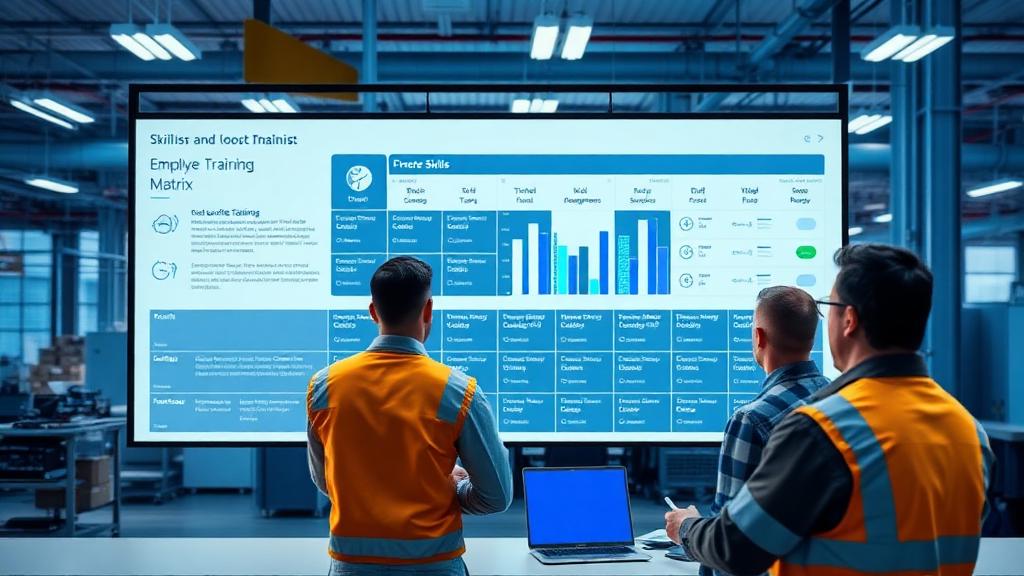
Moving beyond compliance to build a skills management approach that drives performance and development.
Many organisations approach skills management primarily from a compliance perspective – tracking certifications, ensuring mandatory training is completed, and satisfying regulatory requirements. While compliance is undeniably important, treating it as the sole purpose of skills management leaves enormous value on the table.
A performance-focused approach to skills management connects workforce capability directly to operational outcomes. It transforms the skills matrix from a compliance checkbox into a strategic tool that drives development, flexibility, and excellence.
The Compliance Trap
Compliance-focused skills management tends to create several problems:
- Tick-box mentality – Training becomes something to "get through" rather than something that builds genuine capability
- Minimum standards – The focus is on meeting the minimum requirement rather than developing mastery
- Reactive approach – Skills gaps are only identified when a compliance audit flags them
- Disconnected from operations – The skills database lives in HR and has little connection to operational planning or daily management
- Limited engagement – Workers see training as an obligation rather than an opportunity for growth
None of this is to say compliance doesn't matter – it absolutely does, particularly in regulated industries like pharmaceuticals, food and beverage, and healthcare. The point is that compliance should be the floor, not the ceiling, of your skills management approach.
A Performance-Focused Approach
When skills management is linked to operational performance, the conversation shifts from "Are we compliant?" to "Are we capable?" This opens up significant value:
Strategic Workforce Planning
Skills matrices become strategic tools when they're connected to operational requirements. By mapping the skills needed for each role and process, organisations can identify gaps proactively and develop targeted training plans that build capability where it matters most.
Cross-Training and Flexibility
Understanding the current skill profile of your workforce enables targeted cross-training programs. Multi-skilled workers provide operational flexibility – the ability to respond to absences, demand changes, and process variations without compromising quality or safety.
Development Pathways
A performance-focused approach creates clear development pathways for workers. They can see what skills they need to develop, how they're progressing, and what opportunities are available. This drives engagement and retention.
Connection to Daily Management
When skills data is visible in the daily management system, it informs decisions about task allocation, identifies training priorities, and highlights risks. If a critical process requires a specific skill and only one person on shift has it, that's a risk that should be visible and managed.
Digital Skills Management
Digital platforms transform skills management by providing:
- Real-time visibility into current capability across the workforce
- Automated tracking of training completion, certification expiry, and competency assessments
- Gap analysis that identifies where capability falls short of requirements
- Integration with operational systems so skills data informs daily decisions
- Reporting that satisfies both compliance requirements and operational needs
Skills Management as Part of Operational Excellence
The most effective organisations use skills management as part of an integrated approach to operational excellence. It connects with standard work, problem solving, and continuous improvement to create a workforce that is not just compliant but genuinely capable.
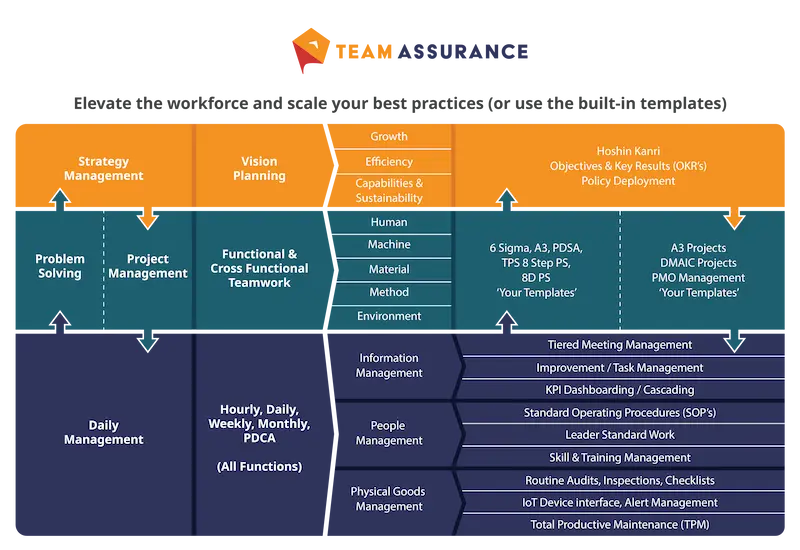
The illustration below shows how TeamAssurance integrates skills management into a connected platform.
If you're a business in need (or a consultant with clients in need) and you'd like to explore how TeamAssurance can transform your skills management approach, contact us for a demonstration today.