We discuss some tier meeting board examples and review the best practices to get the most from your huddles at all levels.
Understanding Tier Meeting Boards
Tier boards, also known as visual management boards, are an essential tool for facilitating Tiered Meetings (also known as huddles). These boards are physical or digital displays that present key data and information in a visible and standardised format. By making this information readily available, tier boards help to foster transparency, promote communication, and ensure everyone has a bias for action.
Common elements displayed on a tier board may include:
- Performance Metrics: This may include KPIs, such as production output, quality rates, or safety incidents. Metrics should be relevant to the team and aligned with organisational goals.
- Problem-Solving Status: This may include information on current issues, root cause analysis, and corrective actions. It may also track the progress of ongoing improvement initiatives.
- Standard Work Status: This may include routine tasks, checklists, or shift schedules. This section helps the Team ensure they fulfil their required roles and responsibilities in a timely manner - seeking support where needed.
- Communication: This may include updates from leadership, recognition for team members, or reminders about upcoming events. This section helps to foster a sense of team cohesion and engagement.
Tiered Meetings and Tier Boards: How They Work Together
The purpose of a tiered meeting is to review the information on the tier board, discuss any issues or challenges, and plan for continuous improvement. These meetings are typically brief and structured, with a clear agenda and specific roles for participants.
A tiered meeting might follow a structure like this:
- Review Performance Metrics: The meeting begins with a review of the key metrics displayed on the tier board. This helps to ensure that everyone understands the current state of operations.
- Discuss Issues and Challenges: Next, the team discusses any issues or problems that have been escalated from a lower Tier. Anything that requires support from others, a decision, prioritization or simple awareness.
- Plan for Continuous Improvement: Finally, the team discusses actions to address the issues identified and plans for continuous improvement. This might involve assigning tasks, setting deadlines, or scheduling follow-up meetings.
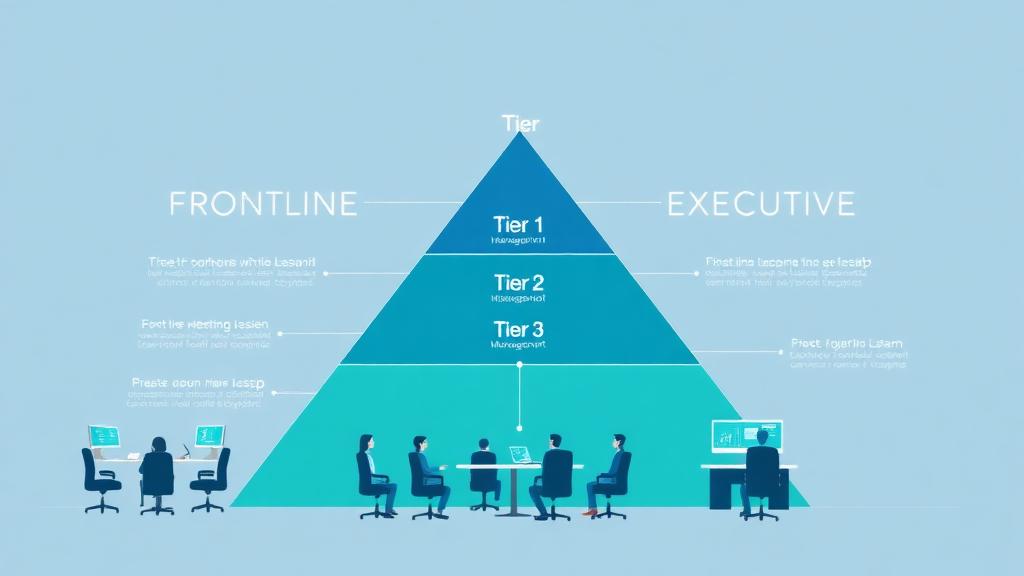
Each tier in the organisation will have its own meeting, starting with frontline teams and progressing up to senior management. This 'cascade' of meetings helps to ensure that information is shared and acted upon at all levels of the organisation.
Tier Meeting Board Examples
Here are some examples of how the information for a tier meeting might be captured and visualised on the tier meeting board:
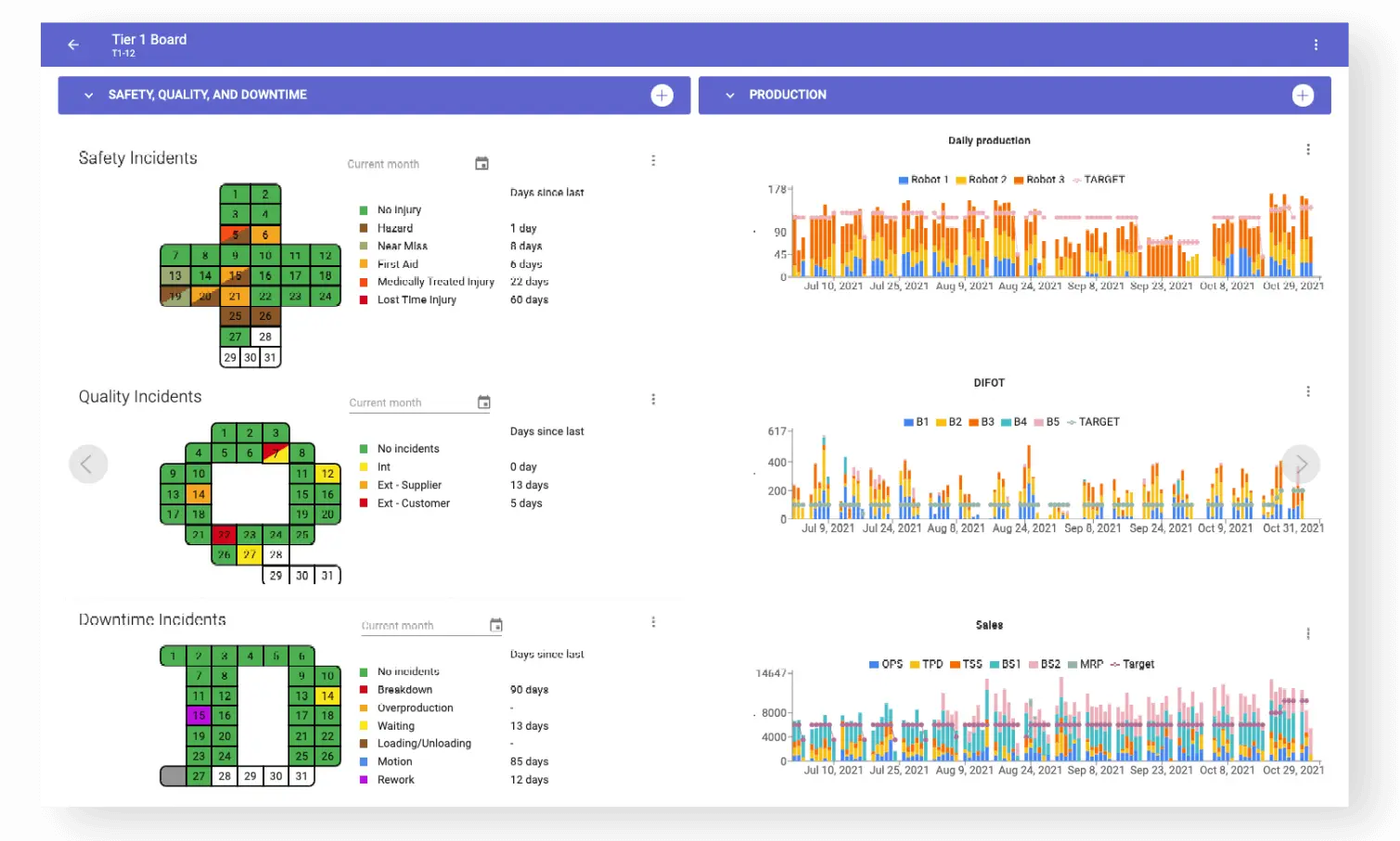
Example 1: Tier 1 Safety, Quality & Delivery Meeting
This is an example of a highly visual, tier meeting board that enables a frontline team to understand performance across key pillars every day. The information presented on graphs and charts acts as agenda items to discuss. Even better, as all data is captured in real-time and linked on TeamAssurance, the team can investigate and share further information.
Example 2: Tier 2 Management Reports
This tier board for Tier 2 and above covers the topline information that managers and supervisors require for cross functional discussion. From the standard safety S-Chart to embedded PowerBI reports to upcoming activities and their dependencies.
Key Topics for Effective Tier Meetings
Tier boards will typically cover information that can be categorised within the following three areas:
1. People
This area covers the safety, presence and mood, training and processes of our people. A safety cross can be used to visualise performance in terms of safety. Including a summary of the skills of employees, visualised in a skills matrix, can ensure no process is orphaned or overlooked every day.
2. Performance
Key Performance Indicators (KPIs) specific to the workstation or function. These KPIs can be visualised using graphs, tracked per shift and should include a target line. If a target is not met, it should be addressed during the continuous improvement discussion at the huddle.
3. Continuous Improvement Ideas & Issue Identification / Escalation
Continuous improvement items for discussion should be captured in real-time and discussed at the tier meeting. These items should be listed out on the tier board. Furthermore, when these items directly linked to organisation strategy and goals, teams have further context for the discussion and its importance.
Issues and ideas shared via the tier board should include descriptions and links to data. This helps us understand the definition of the problem, work to identify cause of the problem if it's unknown, and discuss corrective or preventative countermeasures.
Tiered Meetings Are Part of a C.I. Framework
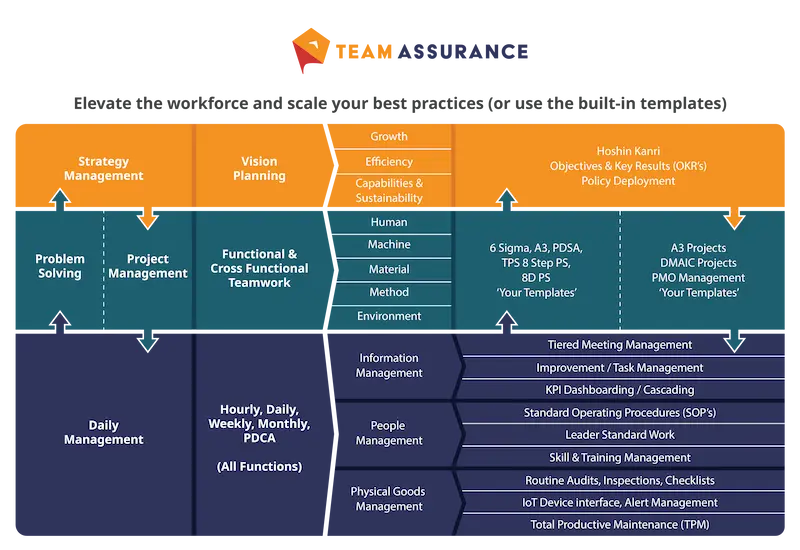
A Tiered Daily Management process that supports the entire PDCA loop is key to continuous improvement. But, to align all of the people, processes and systems involved you must consider how all the adjacent elements interact. The Lean tools we discuss regularly like standardised problem solving techniques, SOPs and more should all be developed simultaneously.
If you're a business in need (or a consultant with clients in need) and you'd like to explore how to create meaningful daily meetings on the frontline and increase staff engagement at all levels with TeamAssurance contact us for a demonstration of the platform today.