A3 thinking is one of the most powerful problem-solving methodologies in the Lean toolbox. Named after the A3 paper size on which it was originally documented, this structured approach helps teams tackle complex issues by breaking them down into manageable components.
What is A3 Thinking?
A3 thinking is more than just a template or a report – it's a way of thinking that embeds the scientific method into everyday problem solving. The A3 format forces clarity by constraining all relevant information onto a single page, encouraging concise communication and logical flow.
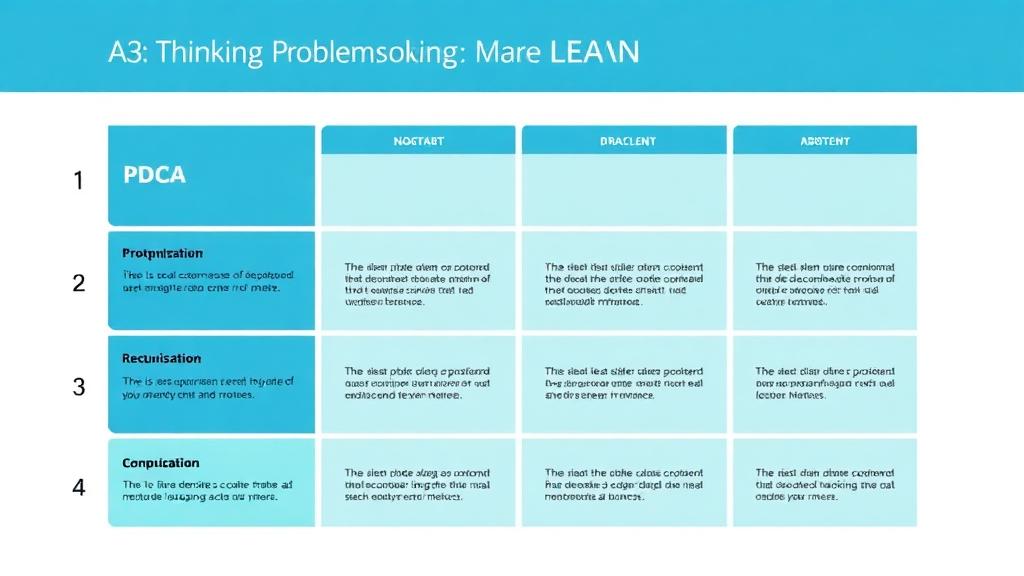
At its core, A3 thinking follows the PDCA (Plan-Do-Check-Act) cycle:
- Plan: Define the problem, analyse the current condition, identify root causes, and propose countermeasures
- Do: Implement the countermeasures
- Check: Verify the results against expected outcomes
- Act: Standardise successful changes or adjust the approach
The Structure of an A3 Report
A well-constructed A3 report typically contains these sections:
- Background / Context: Why is this problem important? How does it connect to organisational goals?
- Current Condition: What is happening now? Use data and visual representations to paint a clear picture.
- Goal / Target Condition: What should the future state look like? Be specific and measurable.
- Root Cause Analysis: What is causing the gap between the current and target condition? Tools like 5 Whys and fishbone diagrams are commonly used here.
- Countermeasures: What actions will address the root causes? Who is responsible, and by when?
- Implementation Plan: How will the countermeasures be executed?
- Follow-up / Results: What happened after implementation? Did the countermeasures work?
Why A3 Thinking Works
The power of A3 thinking lies in several key principles:
Structured storytelling: The A3 format tells a logical story from left to right (or top to bottom). Anyone reading it can follow the problem-solving journey and understand the reasoning behind decisions.
Collaboration: A3s are not meant to be completed in isolation. The process of developing an A3 involves going to the gemba (the actual place where work happens), consulting with stakeholders, and building consensus.
Mentorship: In Toyota's culture, the A3 process is a vehicle for developing people. A mentor guides the problem solver through the thinking process, asking questions rather than providing answers.
Visual management: By condensing information onto a single page, A3s make complex problems visible and accessible. They can be displayed on tier boards for team review and discussion.
A3 Thinking in Practice
Consider a manufacturing team experiencing a rise in quality defects. Rather than jumping to solutions, the team uses A3 thinking to:
- Quantify the defect rate and its impact on customers and costs
- Map the process to identify where defects are occurring
- Use root cause analysis to discover that a machine calibration procedure was inconsistent
- Develop a standardised calibration procedure with visual aids
- Track defect rates after implementation to confirm improvement
This methodical approach ensures that the team addresses the actual root cause rather than treating symptoms.
Digitising A3 Problem Solving
Traditionally, A3 reports were paper-based documents. While this simplicity has its advantages, digital A3 tools offer significant benefits:
- Accessibility: Team members can access and update A3s from anywhere
- Collaboration: Multiple contributors can work on the same A3 simultaneously
- Tracking: Digital tools provide visibility into the status of all A3 activities across the organisation
- Integration: A3s can be linked to daily management processes, ensuring that problem-solving activity flows through to tier meetings
A3 Thinking as Part of the C.I. Framework
A3 thinking doesn't exist in isolation – it's one element of a broader continuous improvement framework. For maximum effectiveness, A3 problem solving should be connected to your daily management system, standard work processes, and strategy deployment activities.
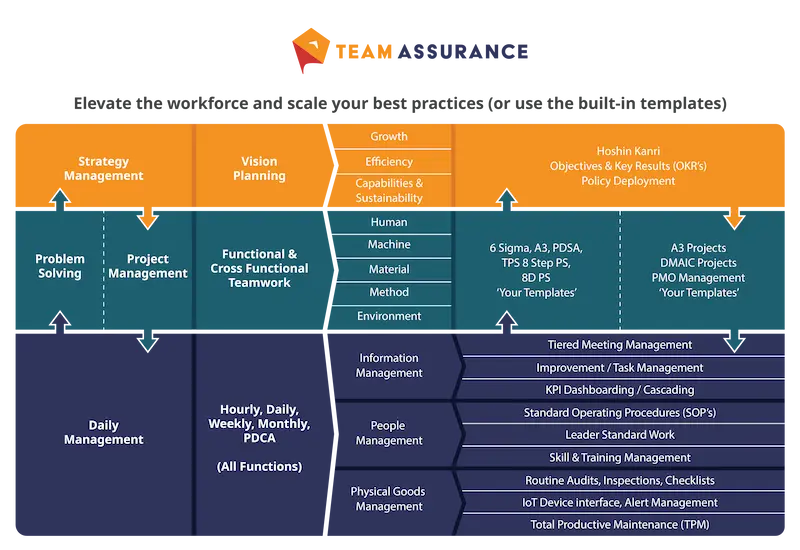
If you're a business in need (or a consultant with clients in need) and you'd like to explore how digital A3 tools can enhance your problem-solving capability, contact us for a demonstration of the TeamAssurance platform today.