
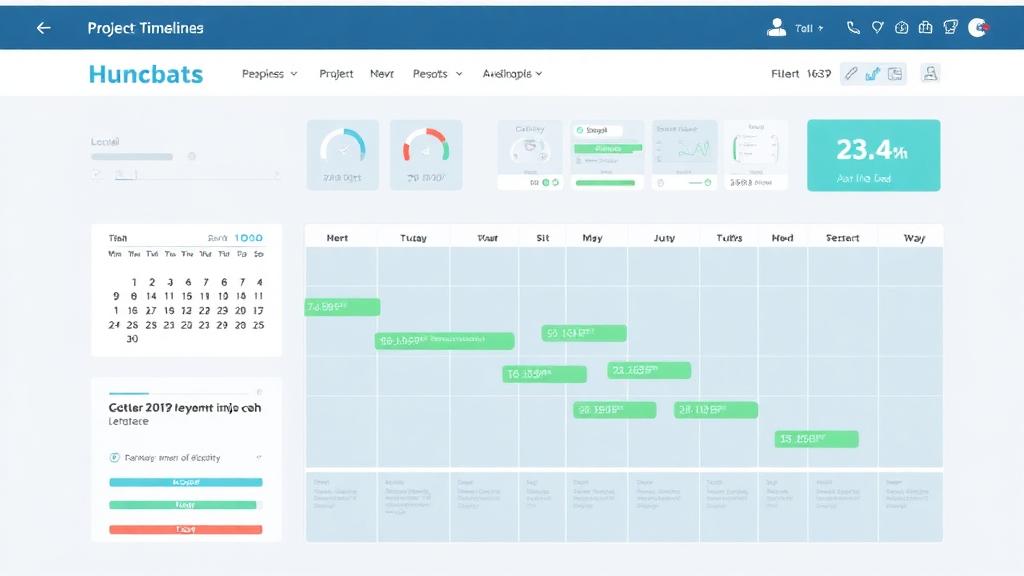
An A3 report template with a calendar view adds a time dimension to the one-page A3: each A3's implementation steps and follow-up dates appear on a shared calendar, so a team managing several improvement projects can see what is due when, where projects collide and which follow-ups are overdue. The report still holds the problem-solving; the calendar holds the rhythm.
At a glance
- What it is: an A3 report template with a calendar view, so each A3's implementation steps and follow-up dates appear on a shared calendar.
- Standard A3 sections: seven sections following the PDCA cycle, from background to follow-up.
- Link to meetings: open A3s and their due steps are reviewed in the Tier 2 or Tier 3 meeting that owns the problem.
- Related: what is an A3 report? and the A3 problem solving template.
The A3 report is a cornerstone of Lean problem solving. But when you're managing multiple improvement projects across teams, the challenge shifts from how to solve problems to when and in what order. That's where the calendar view comes in.
What is an A3 report?
The A3 report is a structured, single-page document that guides teams through the problem-solving process. It captures the background, current condition, root cause analysis, countermeasures, and follow-up – all on one page.
While the A3 format excels at structuring individual problem-solving efforts, organisations typically have dozens (or hundreds) of improvement activities in progress at any given time. Managing this volume requires visibility – not just into the what, but the when.
Why add a calendar view to an A3 report?
A calendar view layered on top of your A3 reports provides several benefits:
Timeline visibility: See when improvement activities are scheduled, when milestones are due, and whether projects are on track. This is especially valuable for Tier 2 and Tier 3 reviews where leaders need a high-level view of improvement activity across the site.
Resource planning: When you can see all A3 activities on a calendar, you can identify resource conflicts and plan accordingly. This prevents teams from being overloaded with too many improvement projects simultaneously.
Accountability: Calendar-based deadlines create natural checkpoints. Teams know when their next update is due, and leaders can quickly identify overdue activities.
Prioritisation: A calendar view makes it easy to see how improvement activities align with strategic timelines. Are the right projects getting attention at the right time?
How does the TeamAssurance A3 calendar work?
TeamAssurance provides an integrated calendar view that sits alongside the traditional A3 report format. Key features include:
- Gantt-style timeline: View all A3 activities across teams and sites on a single timeline
- Milestone tracking: Set and track key milestones within each A3 project
- Filtering: Filter by team, category, status, or priority to focus on what matters most
- Drill-down: Click on any activity to open the full A3 report with all its detail
- Integration with daily management: A3 activities surface automatically in your tier board meetings, ensuring follow-through
How does an A3 calendar turn a report into a rhythm?
The real power of combining A3 reports with a calendar view is that it creates a rhythm of improvement. Rather than problem solving being an ad-hoc activity, it becomes a structured, time-bound process embedded in the organisation's daily and weekly cadence.
This rhythm supports the PDCA cycle at an organisational level:
- Plan: Schedule improvement activities and set milestones
- Do: Execute countermeasures within the planned timeframe
- Check: Review progress at scheduled checkpoints
- Act: Adjust timelines and resources based on results
Frequently asked questions about A3 templates with a calendar view
What is on a standard A3 report template?
Seven sections that follow the PDCA cycle: background, current condition, goal, root cause analysis, countermeasures, implementation plan and follow-up, on a single page so the author stays concise.
Why add a calendar view to A3 reports?
Because the implementation plan and follow-up sections contain dates, and across several A3s those dates compete for the same people. A calendar shows the load, the clashes and the overdue follow-ups that a stack of reports hides.
How do A3 reports connect to tier meetings?
Open A3s and their due steps are reviewed in the Tier 2 or Tier 3 meeting that owns the problem. The calendar view gives that review a simple question each week: what is due, what is late, and what needs help.
Why should A3 reports be part of a connected framework?
A3 reports with calendar views are most effective when they're part of a connected system. The illustration below shows how TeamAssurance integrates problem solving, daily management, and strategy deployment into a single platform.
If you'd like to see how the A3 calendar view works in practice, contact us for a demonstration of the TeamAssurance platform.