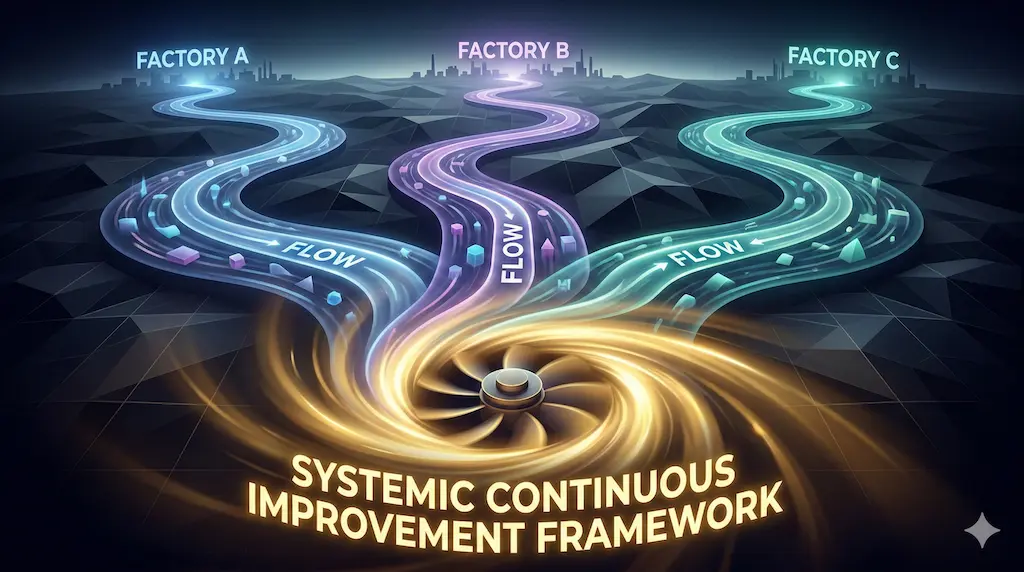
From a blank slate through to daily PDCA cycles, leaders have significant influence over the efficacy of continuous improvement frameworks.
Building an effective continuous improvement framework is crucial for any organisation striving to achieve long-term success. As an improvement leader, you play a critical role in designing and implementing this framework – ensuring it is simple, adaptable, and scalable.
Too often, continuous improvement programs fail not because of a lack of intent, but because the framework itself is overly complex, disconnected from daily operations, or fails to engage the people who need to use it. Getting the framework right from the outset sets the foundation for sustainable improvement.
Start With Purpose
Before designing any framework, be clear about why continuous improvement matters for your organisation. This purpose should connect directly to your strategic objectives and be communicated in language that resonates with everyone from the boardroom to the frontline.
A framework built on a clear purpose ensures that improvement activities are aligned, focused, and meaningful. Without this, you risk creating a system that generates activity but not impact.
Keep It Simple
Simplicity is the hallmark of effective continuous improvement frameworks. The framework must be easy to understand, implement, and evolve. If people need a training manual to participate, it's too complex.
Effective frameworks share common characteristics:
- Clear structure – People know what is expected of them and when. Daily huddles, weekly reviews, and monthly strategy sessions each have a defined purpose.
- Simple tools – Problem-solving templates, visual boards, and standard agendas remove friction and make participation easy.
- Accessible language – Avoid jargon. Use terms that your people understand and relate to. The goal is to keep Lean simple.
- Low barriers to entry – Anyone should be able to raise an issue, suggest an improvement, or participate in problem solving.
Build the Framework Around PDCA
The Plan-Do-Check-Adjust cycle is the engine of continuous improvement. Your framework should enable PDCA at every level of the organisation:
- Frontline teams run rapid PDCA cycles on daily operational issues
- Middle management runs PDCA on process improvements and cross-functional projects
- Senior leadership runs PDCA on strategic initiatives and breakthrough objectives
When PDCA is embedded at all levels, improvement becomes self-sustaining. It's not dependent on a central CI team driving activity – it happens naturally as part of how work is done.
Leverage Digital Tools
Taking advantage of what digital provides makes building a robust framework easier for all involved. A digital daily management platform provides:
- Visibility – Real-time dashboards show the status of improvement activities across the organisation
- Insights – Data from daily operations reveals patterns and priorities that might otherwise go unnoticed
- Connection – Teams across shifts, sites, and functions are linked through a common platform
- Accountability – Actions are tracked, owners are assigned, and follow-up is systematic
Digital tools don't replace the human elements of continuous improvement – leadership, coaching, and engagement – but they amplify their impact significantly.
Share the Responsibility
A framework that depends on a single improvement leader or CI team is fragile. Sustainable continuous improvement requires shared ownership across the organisation.
This means:
- Leaders at all levels understand their role in supporting and sustaining improvement
- Frontline teams have the capability and authority to drive improvement in their areas
- Support functions are engaged and responsive to operational needs
- Strategy deployment (Hoshin Kanri) connects improvement activity to organisational priorities
When everyone owns continuous improvement, the framework becomes resilient and self-reinforcing.
A Connected Framework, Not Point Solutions
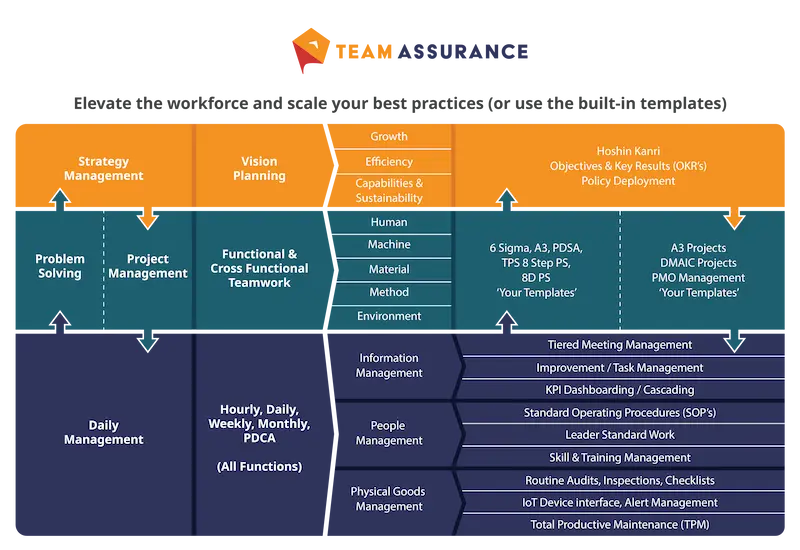
Your continuous improvement framework must connect all the elements – standardised problem solving, Standard Operating Procedures (SOPs), tiered daily management, skills development, and strategy deployment. Developing any of these in isolation creates disconnected tools that limit overall effectiveness.
The illustration below shows how TeamAssurance connects these elements into an integrated platform.
If you're a business in need (or a consultant with clients in need) and you'd like to explore how to set up an effective continuous improvement framework with TeamAssurance, contact us for a demonstration today.