Why consistent, continuous improvement activity is more effective than sporadic improvement events.
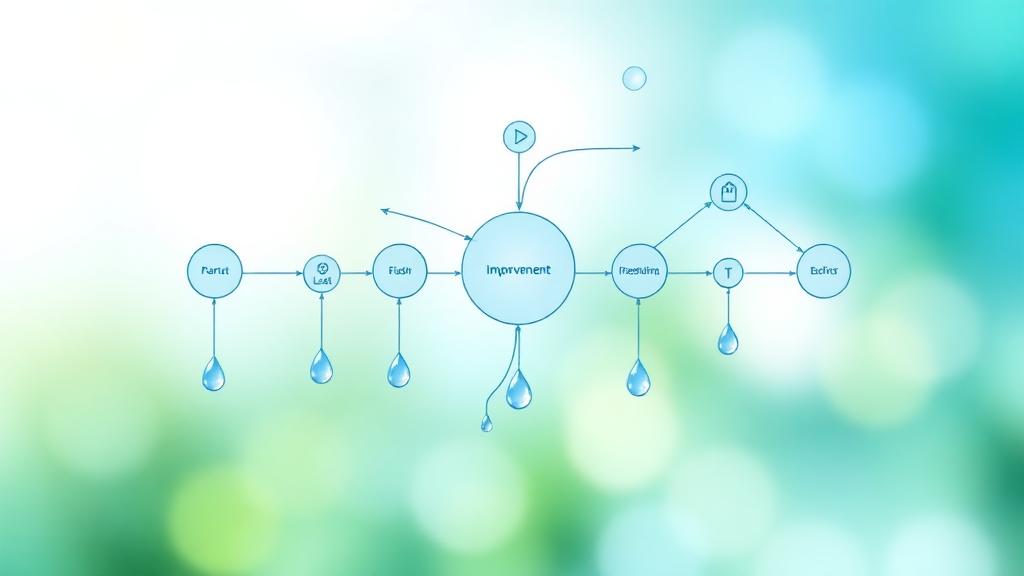
The most effective improvement comes not from occasional events but from consistent daily practice – like a dripping tap that, over time, fills an entire reservoir. The analogy is simple but powerful: small, consistent actions compound into transformational results.
Many organisations approach improvement in bursts – a kaizen event here, a project there, an initiative when resources allow. While each of these may deliver value individually, the gaps between them allow problems to re-emerge, gains to erode, and momentum to stall.
The Dripping Tap vs. The Torrent
Consider two approaches to improvement:
The Torrent: Intensive improvement events separated by long periods of normal operations. A kaizen week delivers impressive results, but within months, many of the improvements have reverted. The next event starts by re-solving problems that were addressed previously.
The Dripping Tap: Small, consistent improvement actions every day. Each individual action may seem insignificant, but they compound over time. Problems are addressed as they emerge, gains are sustained through daily reinforcement, and the cumulative effect is far greater than any single event could achieve.
The dripping tap approach aligns with the true spirit of kaizen – continuous, incremental improvement as part of daily work.
Why Daily Practice Matters
When improvement becomes part of how work is done every day, several powerful dynamics emerge:
Momentum Builds
Daily practice creates momentum that sustains itself. Each small improvement builds confidence, develops capability, and creates appetite for the next one. This positive cycle is self-reinforcing.
Problems Are Smaller
When issues are addressed as they emerge – rather than allowed to accumulate – they're typically smaller and easier to resolve. This reduces the need for intensive problem-solving events and frees resources for proactive improvement.
Learning Accelerates
Daily habits of problem solving and improvement create rapid learning cycles. Teams develop intuition for spotting issues and confidence in addressing them. This capability development is far more effective than classroom training.
Culture Shifts
When everyone improves something every day, continuous improvement stops being a "program" and becomes "how we work." This cultural shift is the ultimate goal of Lean transformation and it's achieved through practice, not pronouncements.
Creating the Structure for Flow
Improvement doesn't flow naturally – it requires structure and discipline. The tiered daily management system creates this structure by:
- Surfacing issues – Daily huddles identify problems and improvement opportunities
- Assigning actions – Issues are turned into trackable countermeasures with clear owners and deadlines
- Following up – The daily rhythm ensures actions are reviewed and completed
- Escalating – Issues that can't be resolved locally are escalated through the tiered structure
- Celebrating – Completed improvements are recognised, sustaining motivation
Digital Tools Support the Flow
Digital daily management tools make it easier to maintain the flow of improvement activity by:
- Making it simple to capture issues and improvements in real-time
- Tracking actions to completion with automated reminders
- Providing visibility across teams, shifts, and sites
- Generating data that reveals patterns and priorities
- Connecting improvement activity to strategic objectives
When the friction of capturing and tracking improvement is reduced, the volume and velocity of improvement activity increases naturally.
From Dripping Tap to Steady Stream
The goal is to move from sporadic improvement events to a steady stream of daily improvement activity. This doesn't happen overnight – it requires patience, practice, and consistent leadership support. But the results are transformational.
Organisations that achieve this state find that they improve faster, sustain gains more effectively, and develop a workforce that is genuinely engaged in making things better every day.
A Connected Framework Sustains the Flow
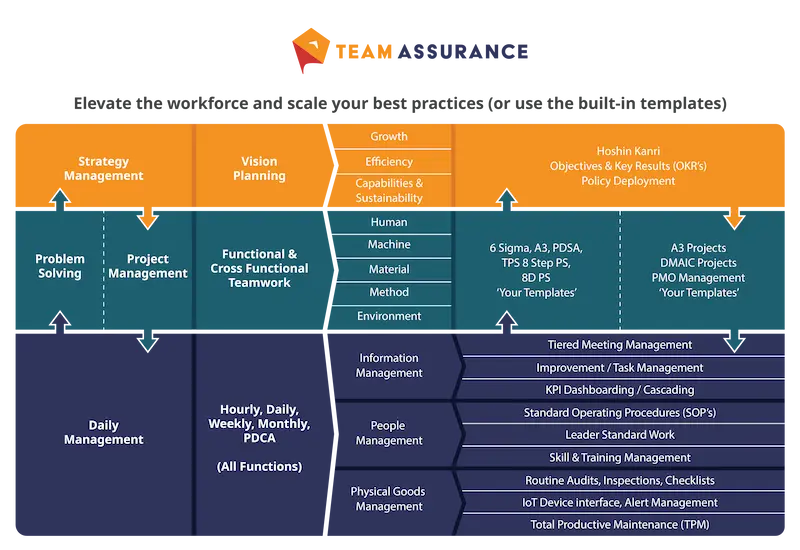
Improvement flow requires a connected framework – standardised problem solving, Standard Operating Procedures, tiered daily management, and strategy deployment all working together. Developing these in isolation creates disconnected tools that restrict rather than enable flow.
The illustration below shows how TeamAssurance connects these elements into a cohesive platform.
If you're a business in need (or a consultant with clients in need) and you'd like to explore how TeamAssurance can help your improvement activity flow, contact us for a demonstration today.