
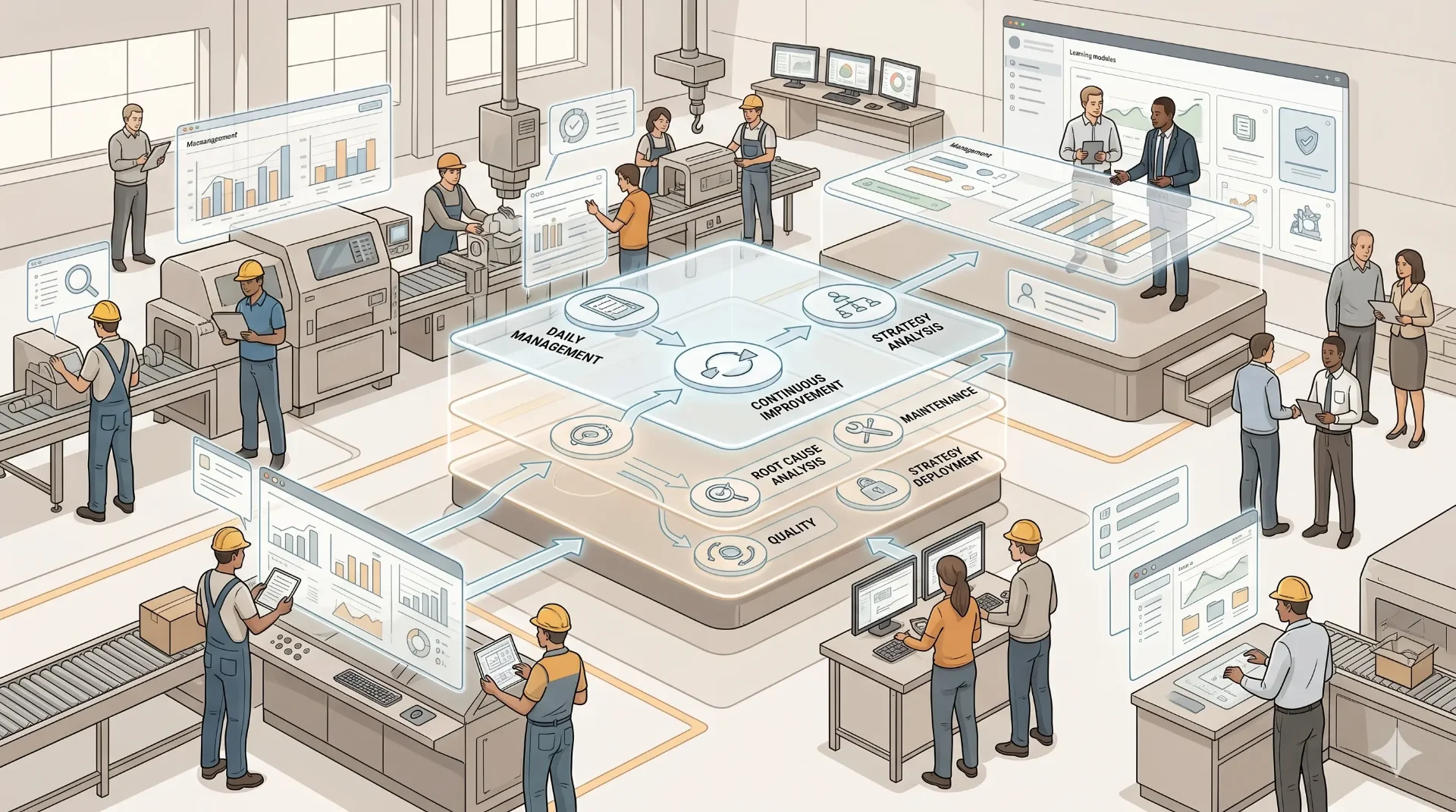
Most organisations are surrounded by systems. They have systems for safety, quality, maintenance, training, projects, audits, strategy deployment and reporting. Walk into almost any operation today and you'll find no shortage of software, dashboards, workflows, management system and data.
Yet despite all of this, many organisations continue to wrestle with a surprisingly familiar set of frustrations. The same problems keep returning. Knowledge remains trapped within individuals. Sites learn the same lessons independently. New leaders inherit old problems. Performance varies significantly between teams doing similar work.
This is why I've become increasingly convinced that most organisations don't have an information problem.
Most organisations don't have an information problem.
They have a continuous learning problem.
That distinction matters because for the last twenty years we've invested heavily in systems that help us collect information, manage workflows and report performance. Those systems are useful and often necessary. What they rarely do, however, is help an organisation systematically learn from its own experience.
This is where the idea of an Operational Learning Platform begins.
The Problem Most Organisations Are Actually Trying To Solve
Take a typical manufacturing operation. Every day it generates an enormous amount of experience. Machines fail, quality issues occur, customer complaints arise, near misses happen, improvements are implemented, projects succeed and projects fail. Operators discover better ways of working. Supervisors solve recurring problems. Maintenance teams identify emerging risks.
Every one of these events contains information. More importantly, every one of these events contains learning.
The problem is that much of that learning never becomes organisational capability. The lesson is learned and then forgotten. Or it remains trapped within an individual, a shift, a department or a site. Eventually the organisation pays for the same lesson again.
Most operational leaders have seen this happen repeatedly. A problem is solved, only to return months later. A site develops a better way of working, but nobody else hears about it. An experienced employee leaves and takes years of accumulated knowledge with them.
The challenge is not generating experience.
The challenge is converting experience into capability.
That capability ultimately determines long-term operational excellence and sustained organisational performance.
From Information Systems To Learning Systems
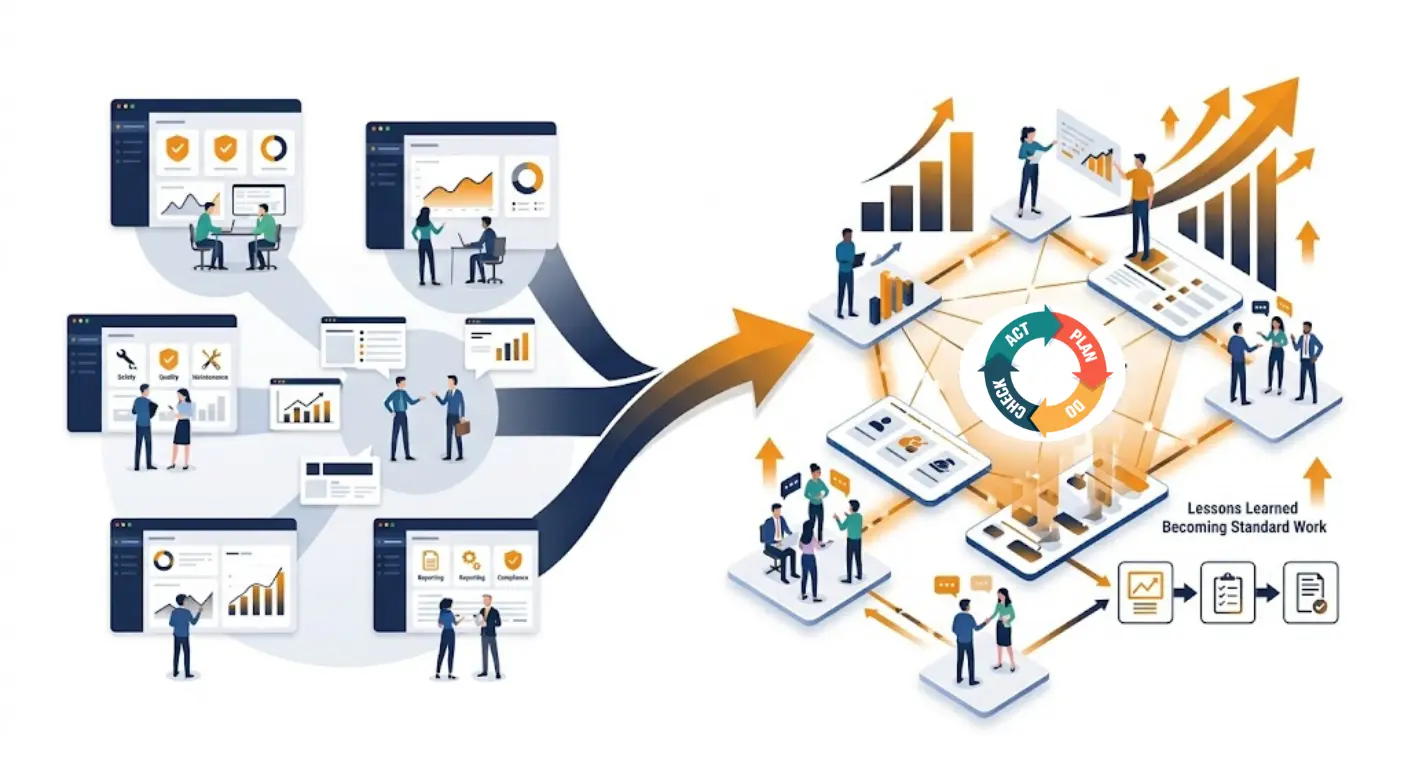
Historically, most operational software and management systems have focused on recording information, managing workflows, tracking compliance and reporting performance. These are all worthwhile activities and most organisations need them.
The problem is that none of them necessarily answer a more important question.
How does an organisation become smarter over time?
How does it support continuous improvement at scale?
How does it learn from every breakdown, every customer complaint, every improvement project and every audit? How does it ensure that knowledge survives changes in personnel? How does it spread lessons quickly across shifts, departments and sites? How does it improve its ability to adapt?
These are fundamentally different questions. They are not workflow questions. They are not reporting questions. They are not compliance questions.
They are learning questions.
An Operational Learning Platform exists to answer them.
What Is An Operational Learning Platform?
An Operational Learning Platform is a system designed to help organisations capture, distribute, apply and improve knowledge generated through daily management and operations.
Its purpose is not simply to manage work. Plenty of systems already do that.
Its purpose is to help the organisation learn.
In practical terms, this means connecting the activities where learning naturally occurs. Daily management, structured problem solving, quality management, maintenance, safety, skills development, continuous improvement, change management and strategy deployment all generate valuable organisational knowledge. Most businesses manage these activities separately. An Operational Learning Platform views them as connected sources of learning.
The objective is simple. Every problem solved, every lesson learned and every improvement achieved should strengthen organisational capability and create sustained performance improvement.
The Connection To PDCA
At its core, operational learning is simply Plan-Do-Check-Act executed well.
Every operation already runs thousands of PDCA cycles. Operators run them. Supervisors run them. Managers run them. Executives run them. Some occur every hour. Others occur every quarter. Whether people realise it or not, the quality of these cycles largely determines the quality of organisational performance.
Strong organisations learn quickly because learning becomes embedded into standard work and leadership routines. Weak organisations learn slowly.
An Operational Learning Platform improves both the speed and quality of these learning cycles. It helps organisations capture what was learned, distribute it more effectively and apply it more consistently. In doing so, it strengthens the organisation's ability to adapt.
Why AI Changes The Conversation
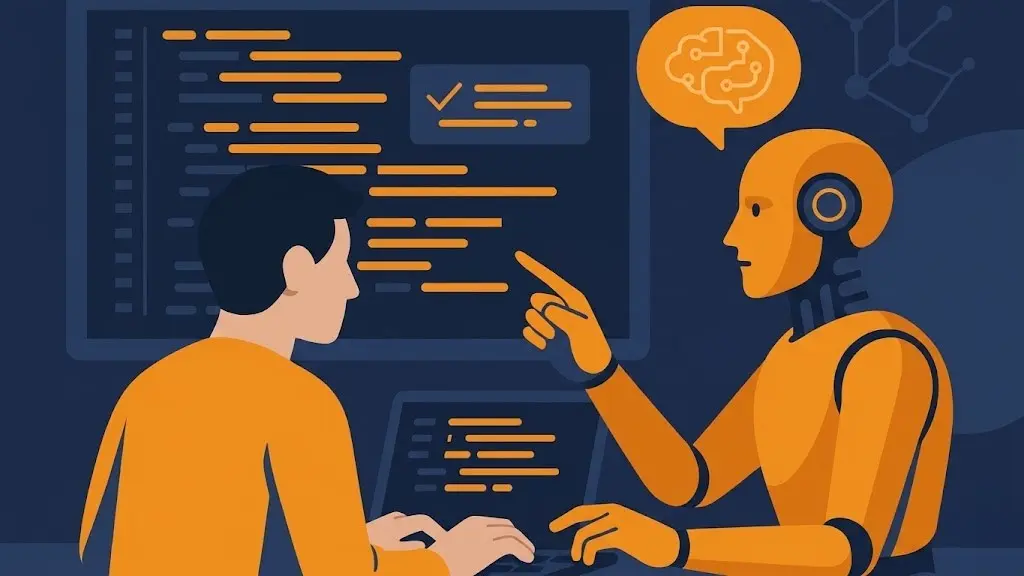
Much of the current discussion around AI focuses on automation and productivity. Those are useful conversations, but I suspect the larger opportunity sits elsewhere.
The more interesting question is whether AI can help organisations learn faster.
Can recurring problems be identified earlier? Can lessons learned in one area be surfaced elsewhere? Can emerging risks become visible before they become incidents? Can knowledge be retained even as people move roles, retire or leave the business?
These are learning problems.
The most significant contribution AI may make to operations is not replacing people. It may be helping organisations improve their ability to learn from themselves.
Why This Matters
Competitors can buy similar equipment. They can implement similar software. They can hire similar consultants and benchmark similar processes. In many cases they can access the same technology and recruit from the same labour market.
What they struggle to copy is an organisation's accumulated learning.
They cannot easily acquire years of captured experience, embedded knowledge, disciplined problem solving, organisational memory and continuous improvement capability. They cannot purchase the habits, judgement and capability that emerge when an organisation consistently learns from its own experience.
To learn is to adapt. And in a world where markets, technologies and customer expectations are changing rapidly, the ability to adapt is becoming one of the most important competitive advantages available.
This is why Operational Learning matters.
Because ultimately, modern operational excellence depends less on the quantity of information and more on how effectively organisations learn from it.
And why Operational Learning Platforms are likely to become increasingly important.
Not because organisations need more systems.
Because they need systems that help them become smarter over time.
Ultimately, the organisations that pull ahead are rarely those with the fewest problems. They are usually the ones that learn the fastest from the problems they have.
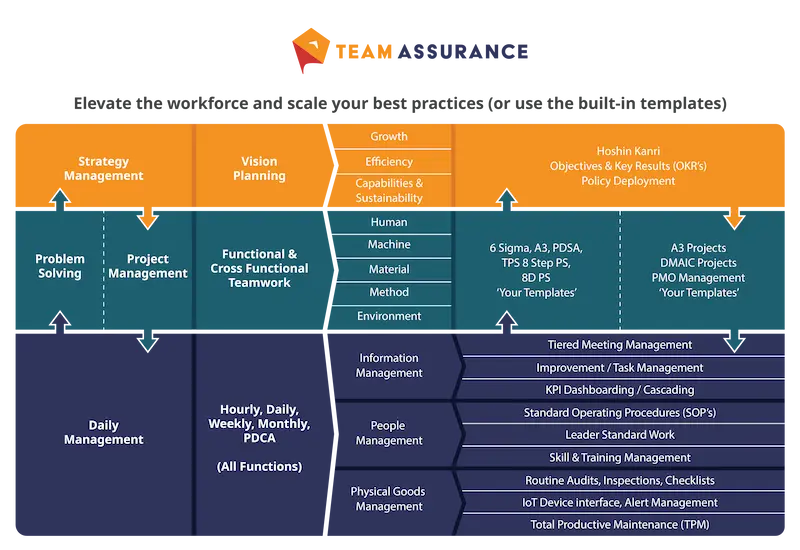
The illustration below shows how TeamAssurance connects the activities where operational learning naturally occurs. By bringing together daily management, structured problem solving, continuous improvement and strategy deployment into a connected operational learning platform, organisations can turn everyday experience into lasting organisational capability and sustainable operational excellence.
If you'd like to explore how TeamAssurance can help your organisation build a connected Operational Learning Platform, book a demonstration today.