
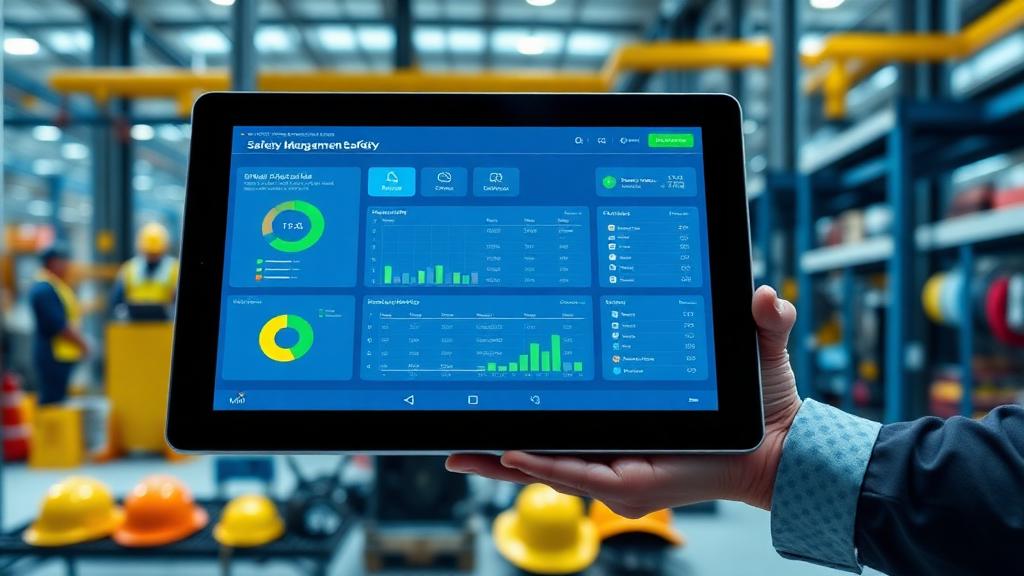
Behaviors drive habits, which in turn creates the culture of the workplace. So how do we systematize and scale positive behaviors to drive a safety culture?
I've been thinking a lot about this in reference to Heinrich's principle (the Accident triangle). This model suggests that many individual behaviors ultimately lead to an injury. The logic behind Behavior-Based Safety is that by addressing the unsafe behaviors of individuals it will lead to less injuries. It's a step in the right direction, but insufficient on its own.
Start with Safety Hazards
Firstly, there are many high risk safety hazards in the workplace that have no relation to worker behavior. It may be ensuring all equipment have guards in an industrial setting, or that appropriate disposal bins are in place for needles in a healthcare setting. Providing a psychologically safe space for employees to raise hazards is the beginning of behavioral change – and it starts with the leaders.
The Foundations of Safety
While the Heinrich Triangle concentrates on worker behavior, it lacks an essential systems component. I envisage a model where there is a psychological safety culture and a Daily Operating System (Daily Management System) to support it.
Safety Culture: Accountability and Recognition
A good leader will praise the positive behavior in a team setting, and coach the corrective behavior one-on-one. Team members learn that they're recognized for good behaviors, and also that it's safe to raise concerns.
The practical side is that Actions that arise as part of the DMS must be a closed loop – assigned, tracked, closed out and the originator kept informed throughout.
One point lessons are a useful tool to communicate positive or corrective behavior. These should be quick to create and share within a team, across teams, and across sites.
Problem Solving and Employee Development
Team members are often the best source of insight for why or how a problem is occurring. Use their insights in a cross-functional problem solving team. Ishikawa diagrams and 5 Whys are great exercises, then let team members lead the investigation actions. For larger issues, use the A3 report format.
Checklists are a useful tool to ensure processes are standardised and that safety checks and safety walks become part of the operating model.
Communication and Coordination
For increased speed of organisational improvement, teams must be able to share from the experiences of all teams in their networks. This removes the 'single speed' nature of improvement.
Roll up all safety actions, one point lessons and problem solving into a toolbox talk. One of our customers does this using a saved search titled 'Safety Toolbox talk' and is able to run through these without any preparation.
Daily Management System
The DMS is critical. Check-in regularly through tier meetings and daily huddles, solve problems regularly, engage and support people in the process.
One customer introduced an Operational Excellence Management System (OEMS) that provided leaders with tools to foster a psychologically safe culture. The frontline proactively engaged in their own safety observations. From an already impressive safety record, in one year they further reduced injuries by 35%.
Part of a C.I. Framework
For any safety culture to be sustained and thrive, it must be supported by adjacent processes and systems. Tools like Leader Standard Work, standardised problem solving techniques, and a Tiered Daily Management system should work together to handle the full PDCA loop.
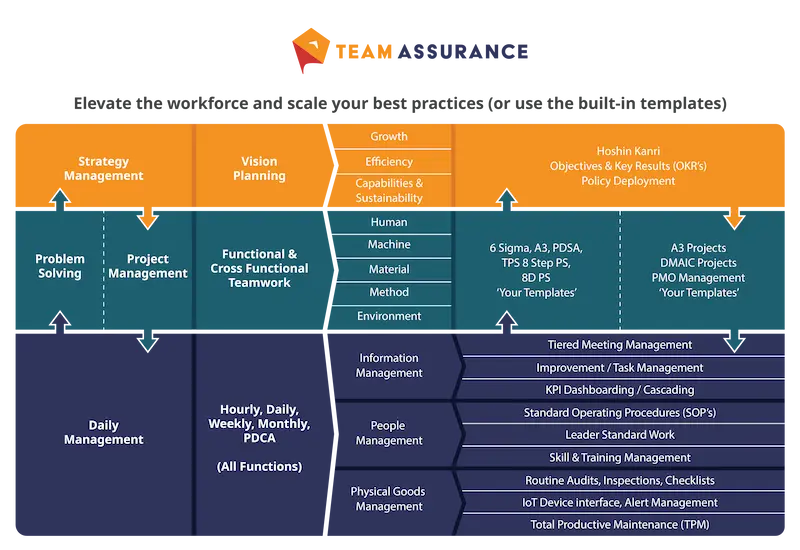
Want to explore the opportunities offered by digital-aids to Lean tools? Contact us for a demonstration of the TeamAssurance platform today.