
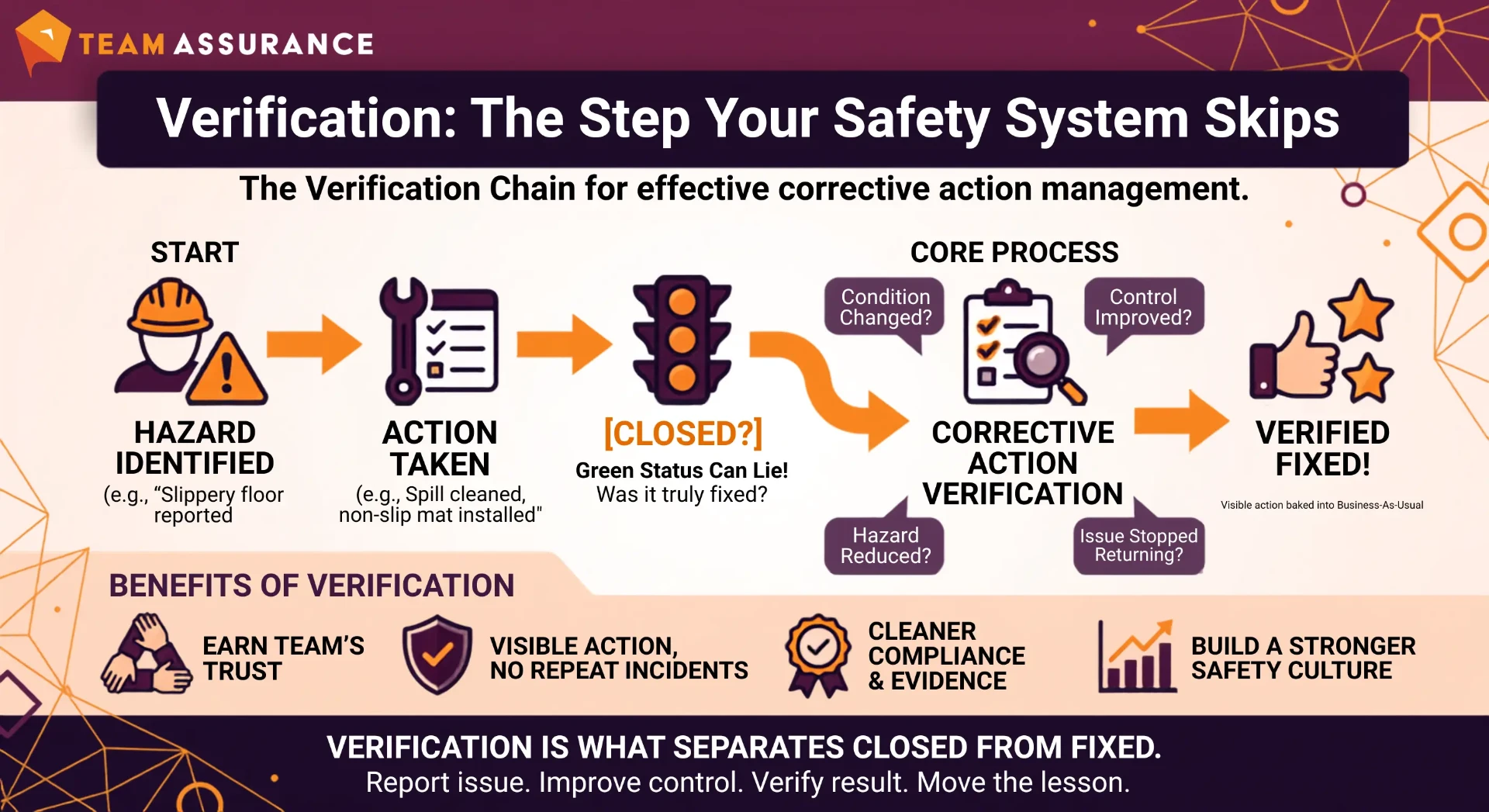
Closed Is Not Fixed
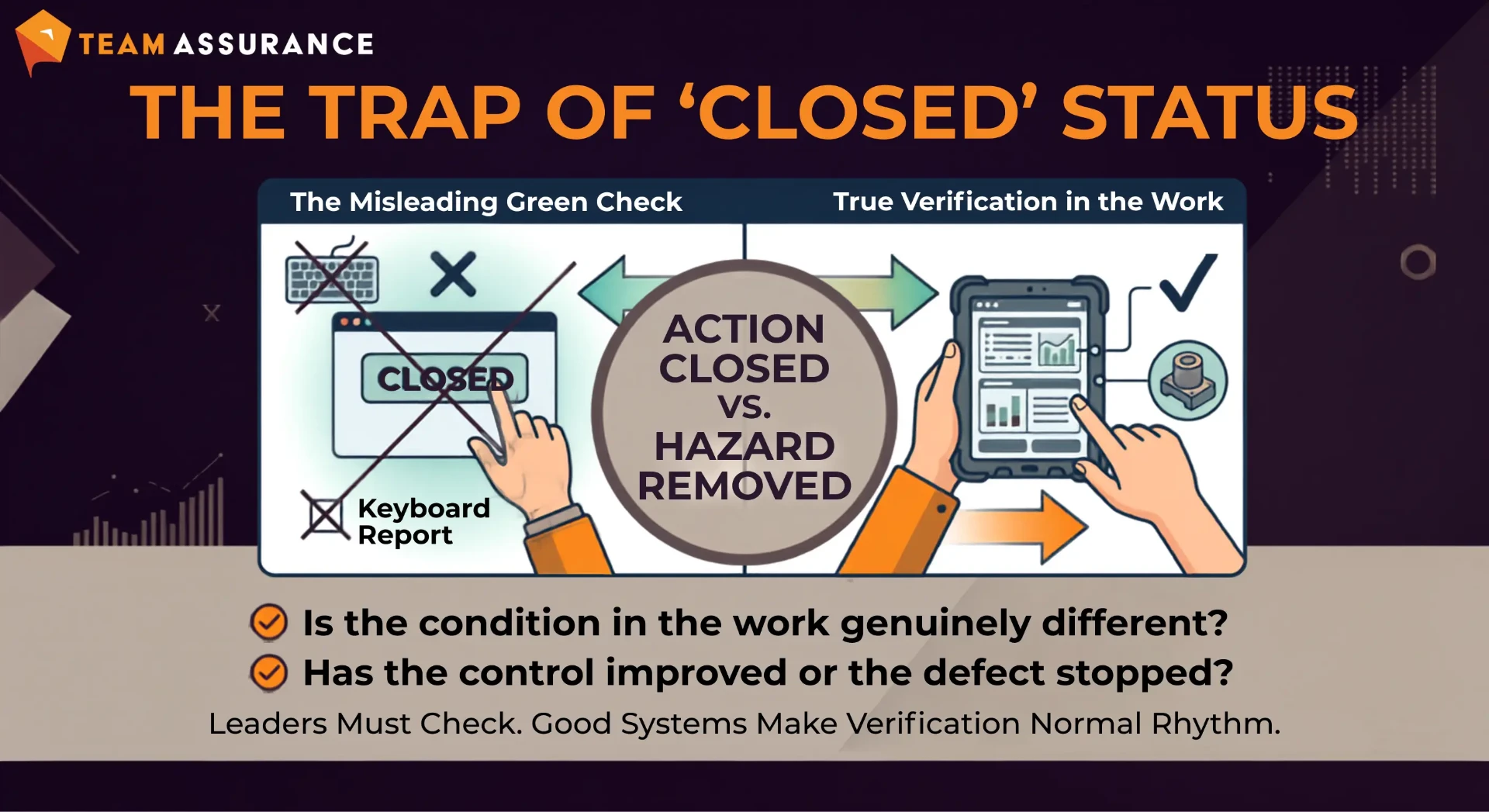
A safety or quality action is not finished when someone changes the status to closed.
That little green Complete status can be misleading. Does it mean the hazard was genuinely removed or the defect was actually prevented from recurring? Or does it mean a reminder was sent?, a photo was uploaded?, a procedure was changed? or, worse, somebody simply got tired of seeing the overdue action sitting on the list.
Verification is what separates closed from fixed.
Corrective action verification asks plain questions of practical people. Did the action actually change the condition in the work? Did the control improve? Did the hazard reduce or the source of the defect disappear? Did the same safety or quality issue stop coming back?
If the answer is unclear, the action is still alive. And as a leader, you need to go and check.
A good safety and quality management system makes this part of the normal operating rhythm rather than another administrative step. The action owner completes the work. The supervisor checks the condition. The leader confirms that the control is holding. Then the lesson moves into the standard, pre-start, training, audit, inspection, checklist or routine where it belongs.
That is how repeat incidents and defects shrink.
Make the Whole Condition Visible
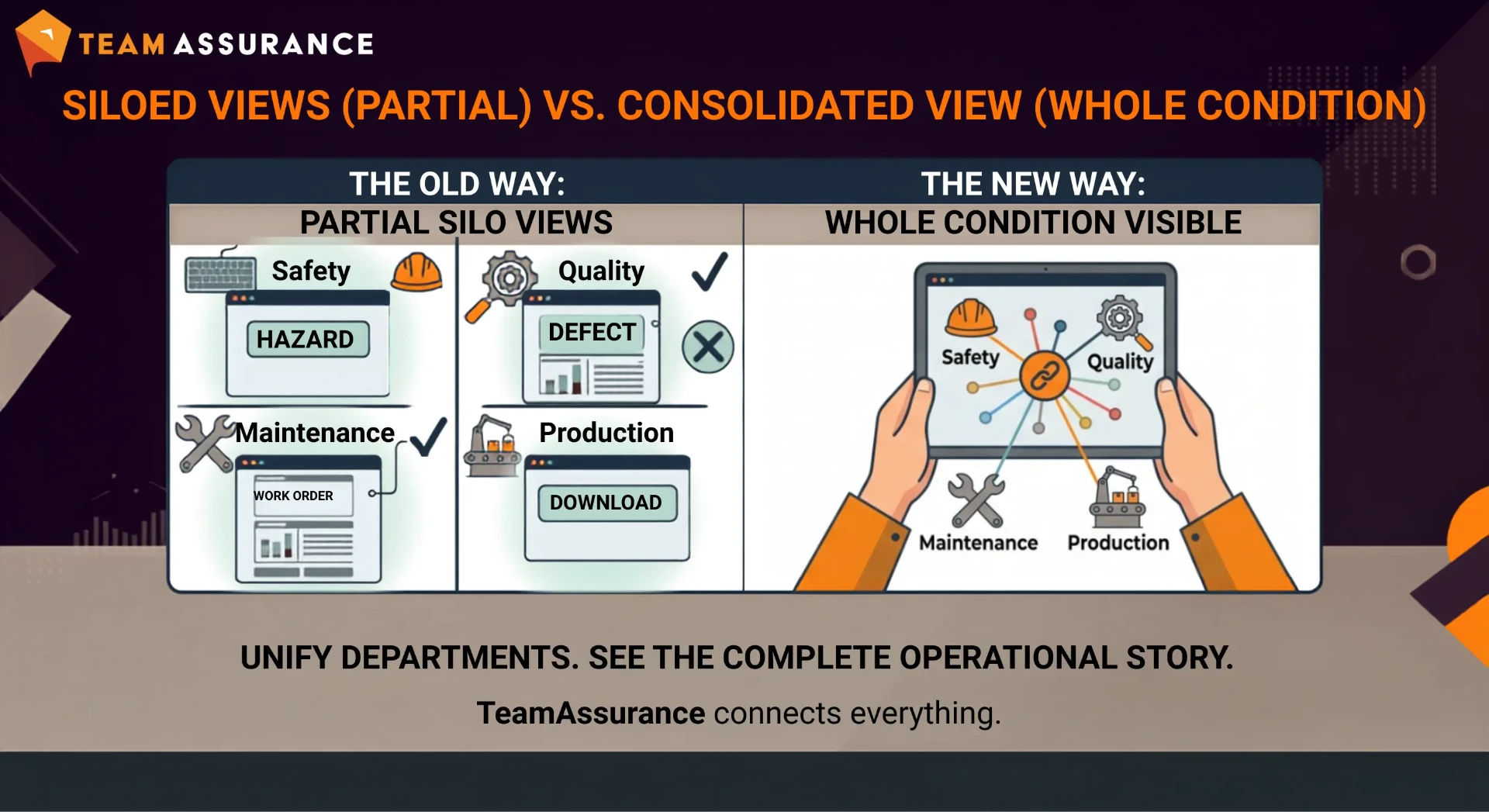
It also becomes much easier when safety and quality are part of the same operational management system used to manage delivery, maintenance, cost and people. Hazards and defects rarely respect the neat boundaries we draw between departments. A guarding issue may require maintenance. A manual-handling risk may be related to a recurring equipment fault. A quality defect may be causing operators to intervene in a process more often than they should. Equally, a recurring equipment condition may be producing defects on one shift and creating a safety exposure on another.
If safety or quality information lives inside its own silo, the safety team may see the hazard perfectly, the quality team may see the non-conformance, maintenance sees a work order, production sees downtime and the supervisor sees another overdue action. Everyone only has a piece of the story.
A consolidated platform makes the whole condition visible.
That means a safety or quality action can remain connected to the equipment, the production area, the maintenance issue, the defect or hazard, the owner, the original risk or non-conformance and, importantly, the verification result. Leaders outside the safety or quality function can see what matters to them without having to become users of another specialist silo. The issue can move naturally through Tier 1, Tier 2 and Tier 3 management rather than disappearing into a separate safety or quality workflow.
Verification Is Where Trust Is Built
That visibility matters because safety and quality culture are both built through what happens after someone reports something small.
Someone raises a hazard or flags a defect. The business responds. The action is completed. Somebody goes to the work and verifies that the condition has genuinely changed. The team can see what happened and what was learned.
That is what you would need to get my trust. Others are no different.
The next hazard report or defect flag then comes a little easier. The next weak signal appears a little earlier. Safety and quality culture get stronger without another campaign, poster or hard sell. It becomes visible action baked into business-as-usual.
Compliance gets cleaner too. Regulators, auditors and customers want evidence that risks and quality problems are being controlled, not a list of good intentions. An incident or quality management system should be able to show the original issue, the risk, defect or control involved, the action, the owner, the evidence and the verification result. Better still, it should show how that learning flowed into the wider operating system.
Repeat incidents and repeat defects are expensive. So are repeat investigations, complaints, meetings, retraining, downtime, scrap, rework and apologies. Unverified actions create rework inside the safety and quality system: busy people doing the same job twice while the hazard or defect waits for another turn. This is not great.
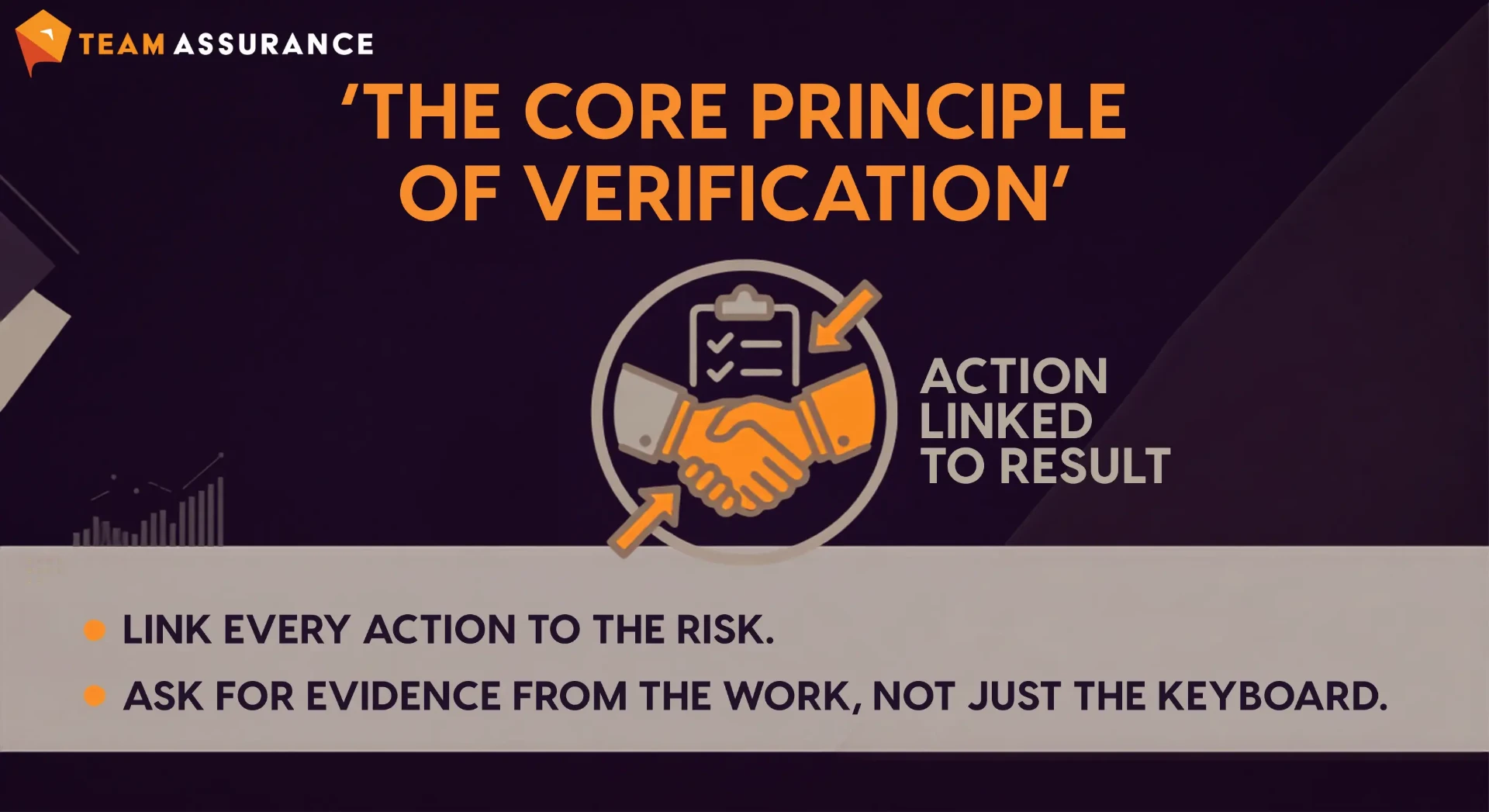
The fix is practical however; Define verification before closure. Link every action to the risk, defect or control it is intended to improve. Ask for evidence from the work, (not simply evidence from the keyboard). Check the condition after the action has had enough time to prove itself. Escalate weak countermeasures before the problem repeats. If the same risk or quality condition could exist somewhere else, move the lesson across shifts, departments or sites. Real Yokoten.
And make that information visible beyond Safety and Quality.
A recurring hazard may be telling you something about maintenance. A cluster of quality defects may expose an ergonomic problem. Repeated production interruptions may be creating unsafe interventions or process variation. A defect trend may point back to equipment condition, training, standard work or raw material. Once Safety, Quality, Delivery, Cost and People can be viewed through the same operational lens, patterns that were previously hidden inside functional systems become much easier to see.
AI can help with the dull looking. It can flag actions that appear to have been closed unusually quickly, hazards or defects that returned after closure, repeated controls that keep failing or similar issues appearing elsewhere in the organisation. In a consolidated system, it can look beyond the individual safety or quality record itself and help identify related equipment, maintenance, production or operational history that may otherwise be missed.
Then leaders do the human work: verify, coach, support, improve and hold the line.
Closed means the task was completed. Fixed means the condition changed. A serious safety and quality system should know the difference, and a serious operational system should make that learning visible well beyond the traditional functional silos.
Verification is where safety and quality management rubber grips the road. Report the issue. Improve the control. Verify the result. Move the lesson.
That is how a safety and quality system earns people's trust.
Want to make sure closed really means fixed? TeamAssurance brings Safety Management, Quality Management and AI Assisted Workflows into the wider operational management system, helping teams connect issues to actions, verify that controls are working and surface recurring patterns across the operation. Explore TeamAssurance's capabilities or book a demo to see how verification and operational learning work in practice.