How digital tools can strengthen your safety management system and improve safety outcomes.
Safety should never be compromised. Yet many organisations still rely on paper-based safety systems that are slow, error-prone, and difficult to audit. These legacy approaches create gaps in visibility, delay responses to hazards, and make it challenging to sustain a proactive safety culture.
Digital tools offer a transformative opportunity to strengthen safety management systems – not by replacing the fundamentals of safety, but by making them more effective, visible, and sustainable.
The Limitations of Traditional Safety Systems
Paper-based safety processes have served organisations for decades, but they come with well-known limitations:
- Delayed reporting – Incident and hazard reports can take days to reach the people who need to act on them
- Limited visibility – Safety data is often locked in filing cabinets or spreadsheets, invisible to the broader organisation
- Inconsistent compliance – Without real-time tracking, it's difficult to ensure audits and inspections are completed on schedule
- Reactive focus – Paper systems tend to capture incidents after they occur rather than identifying and addressing risks proactively
- Disconnected data – Safety information exists in isolation from operational data, making it hard to see the connections between safety performance and operational practices
Key Elements of a Digital Safety System
A digital safety system addresses these limitations by making safety management faster, more visible, and more connected. Key elements include:
Real-Time Incident and Hazard Reporting
Digital tools enable frontline workers to report incidents and hazards immediately – from the point where they occur. Reports can include photos, descriptions, and severity ratings, ensuring that the information is rich and actionable from the start.
Automated Escalation
When a safety concern is logged, digital workflows automatically notify the right people based on the type and severity of the issue. Critical hazards reach safety managers and site leaders within minutes, not days.
Digital Safety Audits
Scheduled audits and inspections are tracked digitally, with automated reminders ensuring nothing is missed. Completed audits are stored centrally, creating an auditable trail that satisfies both internal governance and external regulatory requirements.
Visible Safety Metrics
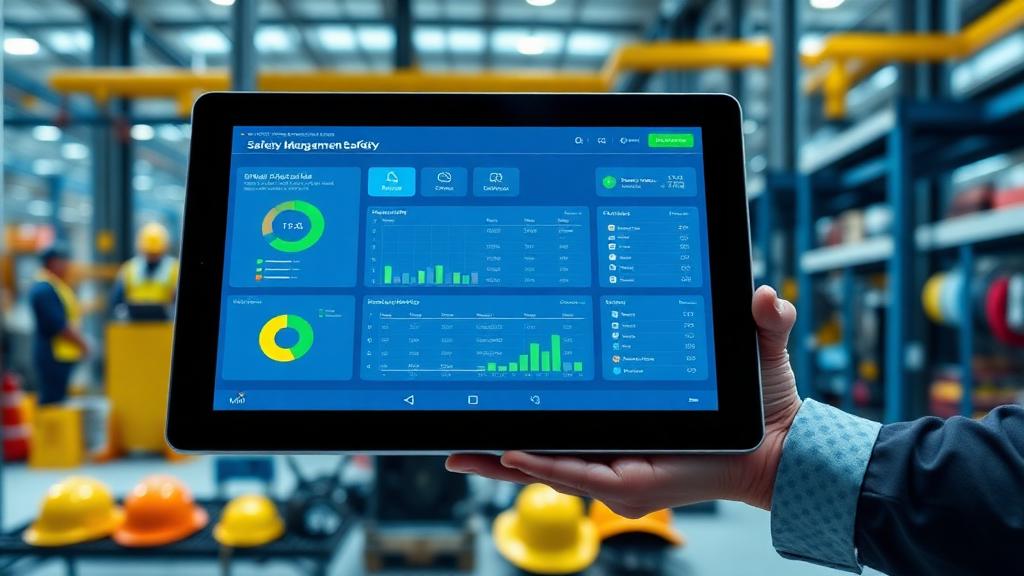
Safety KPIs – leading and lagging indicators – are displayed on digital dashboards that are visible during daily huddles and tiered meetings. This keeps safety at the forefront of every team's daily conversation.
Integration With Tiered Daily Management
Safety is most effective when it's embedded in the daily management rhythm, not treated as a separate program. When safety is a standing agenda item in tier meetings, it receives the consistent attention it deserves.
This integration ensures:
- Safety concerns are reviewed daily, not weekly or monthly
- Escalation follows the same pathway as operational issues
- Corrective actions are tracked alongside operational improvements
- Safety performance is visible to everyone, creating shared accountability
From Reactive to Proactive Safety
The real power of digital safety tools lies in the shift from reactive to proactive safety management. When safety data is captured digitally in real-time, patterns emerge:
- Recurring near-misses in specific areas reveal systemic risks
- Audit completion rates highlight gaps in safety discipline
- Correlation between safety incidents and operational changes identifies root causes
This data-driven approach enables organisations to intervene before incidents occur, rather than investigating after someone has been hurt.
Creating a Safety Culture
Digital tools support the cultural elements of safety too. When workers see that their hazard reports are acknowledged quickly, investigated thoroughly, and resolved effectively, they're more likely to continue reporting. This creates a virtuous cycle where reporting increases, visibility improves, and the organisation becomes genuinely safer.
Conversely, when reports disappear into a paper-based system and nothing visible happens, workers disengage from the safety process – and that's when risks escalate.
Part of a Connected Framework
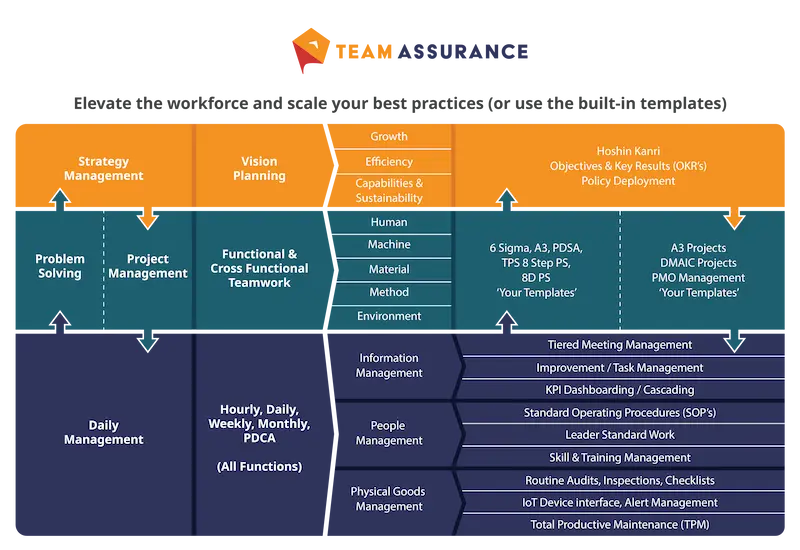
Safety management should not be a standalone system. It needs to connect with operational management, problem solving, skills management, and the broader continuous improvement framework to be truly effective.
The illustration below shows how TeamAssurance integrates safety into a connected platform that avoids disconnected 'Point Solutions'.
If you're a business in need (or a consultant with clients in need) and you'd like to explore how TeamAssurance can strengthen your safety system, contact us for a demonstration today.