

In this article we continue to explore what leaders should focus on when it comes to setting the vision for a lean organisation.
As a leader, one of the most important responsibilities is to set the vision for the organisation. This vision should encompass how lean principles benefit all stakeholders, including customers, employees, suppliers, the business, and the community at large.
Creating a Seamless and Transparent Environment
The first step in setting the vision is to create an environment that is open and transparent. This environment should be focused on growth, learning, and improvement. It should flow like a torrent - seamlessly allowing for innovation, experimentation, and the sharing of ideas.
By creating this type of environment, employees will feel safe and valued, encouraging them to actively participate in the lean process. They will contribute their unique perspectives and insights to create a more aligned vision.
To achieve this, processes must be designed to encourage collaboration and communication, allowing for a free exchange of ideas and feedback. In turn, these processes should be supported by a Lean daily management system that turns insights into activity.
Connecting Everyone with a Shared Purpose
Leaders must ensure that everyone within the organisation is connected with a shared sense of purpose and objectives. This means that employees should understand how their work contributes to the overall vision of the organisation.
By creating a shared understanding of the goals and objectives, employees are more likely to feel motivated and engaged, leading to increased productivity and success. Visual management tools support organisations in this strategic layer as well - not just within daily management.
Setting the Vision by Prioritising Customer Satisfaction
When we talk about 'engaging all stakeholders' in strategy development, often the customer is overlooked. Looking solely inwards at our teams is like tying one hand behind our back when it comes to improvement. Customer satisfaction should be a key consideration for any organisation delivering a product / service.
By prioritising customer needs we can expose barriers to achieving those desires within our processes. After all, when customers feel prioritised and valued, they are more likely to remain loyal to the organisation, leading to increased revenue and growth over time.
Setting the Vision is One Element within the C.I. Framework
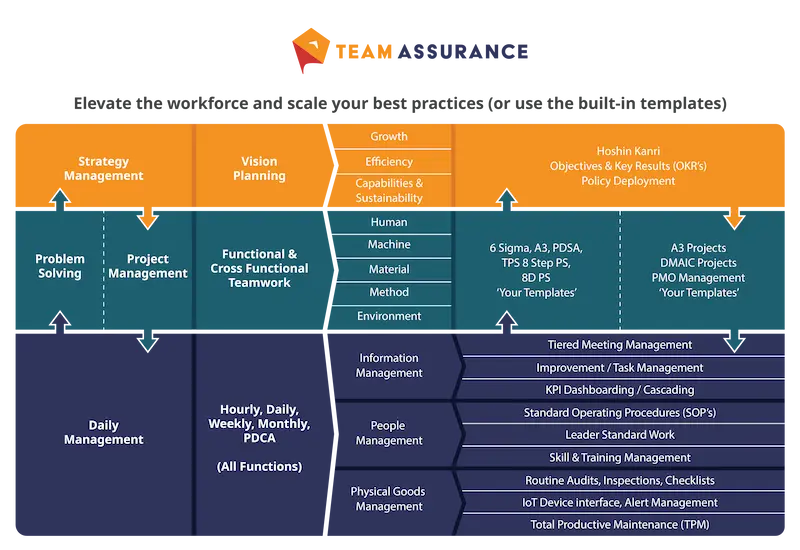
For effective vision-setting and communication we must ensure that all our systems are focused on alignment of everyone. Lean tools like standardised problem solving techniques, documentation, A3 Templates, and a Tiered Daily Management process that supports our PDCA cycles are key to ongoing success.
If you're an organisation in need (or a consultant with clients in need) and you'd like to explore the strategic opportunities that digital-aids to Lean tools provide - contact us for a demonstration of the TeamAssurance platform today.